Homepage

In today’s fast-paced technological environment, defense systems can no longer rely solely on internal R&D. Open innovation—systematically engaging with startups, academia, and civilian tech sectors—has become a strategic necessity. The distinct cases of the US and Israel suggest that diverse models can serve a shared imperative: to leverage civilian innovation in order to maintain national security and a technological edge.
Though an increasing number of states plan to recognize a Palestinian state, no such action—even in large numbers—can confer sovereignty. Under international law, statehood is “independent of recognition by the other states.” Such juridical status is based on Montevideo Convention (1933) requirements of (a) a permanent population; (b) a defined territory; (c) a government; and (d) the capacity to enter into relations with other states. In the specific matter of Israel, recognizing a Palestinian state would undermine a core provision of the Oslo Accords and corollary Arafat-Rabin commitments not to alter the status of territory prior to formal agreement on permanent status. Such premature recognition would also be at odds with the status of the EU and other states as witnesses to the Oslo Accords, and with the multiple endorsements of those Accords expressed in UN resolutions. Acts of recognition in this matter would prejudge the outcome of negotiations that were never completed because of relentless Palestinian terrorism, and would violate the Natural Law origins of international law.
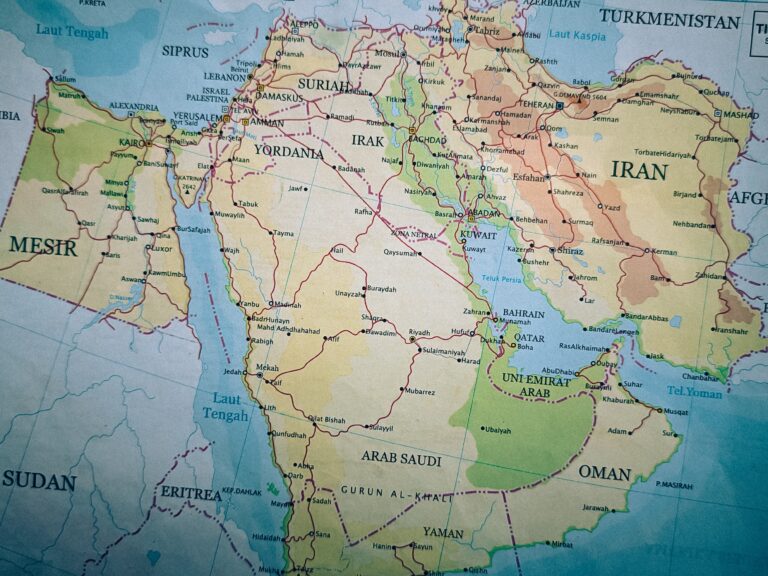
The June 2025 open war between Israel and the Islamic Republic of Iran marked a watershed moment in the history of the Middle East and in the evolution of Israeli warfare. While Israel had previously conducted long-range, high-risk operations such as the 1976 Entebbe raid, the 1985 strike in Tunis and operations against the Houthis in Yemen in the Iron Swords war, the Iran war was the first time in its history that Israel waged a sustained, multi-domain campaign against a geographically distant regional power with no shared border. For 12 days, Israel brought to bear the full weight of its long-range strike capabilities, missile defenses, intelligence networks, cyber arsenal and spectrum warfare, demonstrating a level of operational reach, integration and coordination unprecedented in its military history.
This research offers a thorough historical exploration and a quantitative-statistical analysis of the allegation that the State of Israel committed genocide against the Gazan population following the October 7, 2023, massacre. Specifically, we address the claims that Israel intentionally starved the Gazan population, that IDF ground forces deliberately massacred civilians, and that the Israeli Air Force (IAF) carried out indiscriminate bombings, failing to distinguish between combatants and civilians and conducting disproportionate strikes.

Accessibility Toolbar