Perspectives Papers

Perspectives Papers provide analysis from BESA Center research associates and other outside experts on the most important issues pertaining to Israel and the Middle East.

View Archive

Contemporary antisemitism has the ability to graft itself onto a variety of causes and movements. But the social and information environment in the US and Europe is strongly conditioned by virtue-signaling among elites and increasingly among portions of the middle class. Antisemitism, in part through BDS-fueled antipathy toward Israel, is becoming a signal of middle class respectability. At the same time, though left-wing Western elites remain strongly anti-national, the working classes and other parts of the middle class are becoming renationalized. These and other class conflicts will shape antisemitism in the next decades.
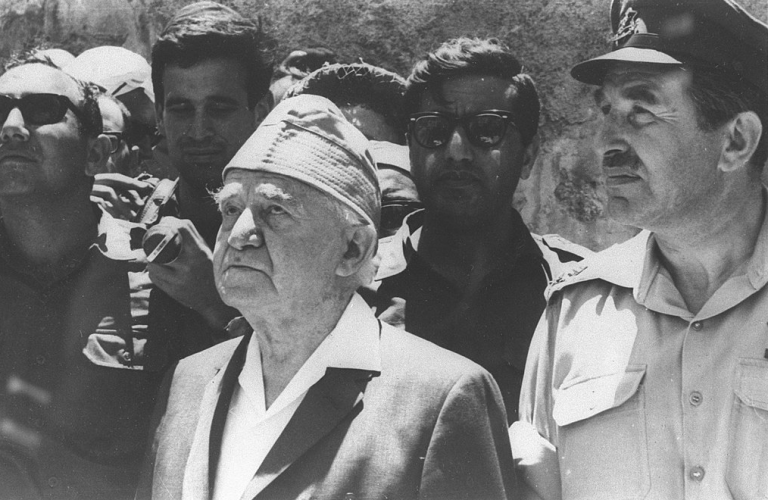
By ignoring millions of declassified documents from the period of the British Mandate (1920-48) and Israel’s early days that show the claim of premeditated dispossession of the Palestinian Arabs to be completely unfounded, “revisionist” journalist Tom Segev’s rewrites David Ben-Gurion’s personal story, and, by extension, the story of Israel’s creation, in an image of his own making in which aggressors are transformed into hapless victims and vice versa.
Many believe the Russian-Chinese partnership, which functions across a variety of economic and political spheres, is only temporary. But Moscow’s disenchantment with the West, and the redirection of its foreign policy toward Beijing and beyond, is rooted in Russian historical thinking. The disagreement between Russia and the West is a full-scale geopolitical separation.
After two highly charged election campaigns, Israeli society – in all its various sectors – is in need of soul-searching and repentance. From a Jewish standpoint, everyone, even the morally virtuous, needs to repent, and each in his/her own way. Regrettably, the notion of repentance has been trapped over the years in a narrow and incorrect interpretation, when it is in fact a miraculous opportunity for renewal.
Brinksmanship may be his trademark, but Turkish president Recep Tayyip Erdoğan is unlikely to provoke the ire of the international community by launching a nuclear weapons program. Still, his demand that Turkey have the right to do so highlights the fracturing of the rules-based international order as well as changing regional realities.
Berlin has surpassed Malmö as Europe’s antisemitism capital, with a wide variety of anti-Jewish and anti-Israel attitudes on display. They include dozens of cases of physical aggression against Jews, including rabbis. Jewish pupils have had to leave public schools. Thirty-five percent of Berliners view Israelis as analogous to Nazis. An Al-Quds Day march takes place annually that calls for the destruction of Israel. Both the municipality and the federal government are two-faced  about the problem of antisemitism.
Relations between Iran and China go as far back as the ancient Silk Road – but despite the recent establishment of a formal comprehensive strategic partnership between the two, Beijing’s economic, political, and strategic interests remain too complex and self-contradictory to permit a close alignment with Tehran. In the post-JCPOA era, China is likely to remain Iran’s top economic partner in the coming years, but it is a mistake to overestimate the Sino-Iranian partnership. The US’s anti-Iran policy and the sanctions that accompany it could prevent the emergence of a more solid partnership.

Accessibility Toolbar