Perspectives Papers

Perspectives Papers provide analysis from BESA Center research associates and other outside experts on the most important issues pertaining to Israel and the Middle East.

View Archive

Though it has been a part of China since 1997 following the transfer of power from Great Britain, Hong Kong enjoys autonomy, a separate judiciary, an independent political system (except for foreign affairs, which are managed by the central government in Beijing), and a free media. The extradition bill recently proposed by Hong Kong Chief Executive Carrie Lam would have severely compromised the separation between the two entities. The bill was vigorously protested by the people of Hong Kong in demonstrations of extraordinary magnitude. The vote was postponed to June 20 and then suspended indefinitely.
Retired Dutch general Toine Beukering – a candidate for chairman of the Senate – said earlier this month that the Jews were “chased like docile lambs into the gas chambers.” This remark, for which he later apologized, once again raised the issue of the huge historical distortion of the Dutch role during WWII. The Dutch, who collaborated massively with the German occupiers, now exaggerate Dutch wartime resistance and underemphasize the disproportionately large role of Jews in it.
A week and a half ago, Hamas organized its weekly confrontation on the Gaza fence in honor of World Jerusalem Day, an event inaugurated by Ayatollah Khomeini in 1979 and celebrated since then primarily by Iran and its Hezbollah proxy. This move reflects the organization’s defiance of the Sunni Arab states, especially those who plan to attend the Trump-sponsored conference in Bahrain.
Following Harry Truman’s recognition of the Provisional Government of Israel in early 1949, James McDonald was appointed the first US ambassador to the nascent Jewish state. In his memoirs, McDonald discusses Israel-Diaspora relations, which are as central today as they were in the early days of the State. This topic continues to be a source of division: witness the slanderous attacks made by Muslim Congresswomen Rashida Tlaib and Ilhan Omar regarding American Jews’ “dual loyalties” and the State of Israel.
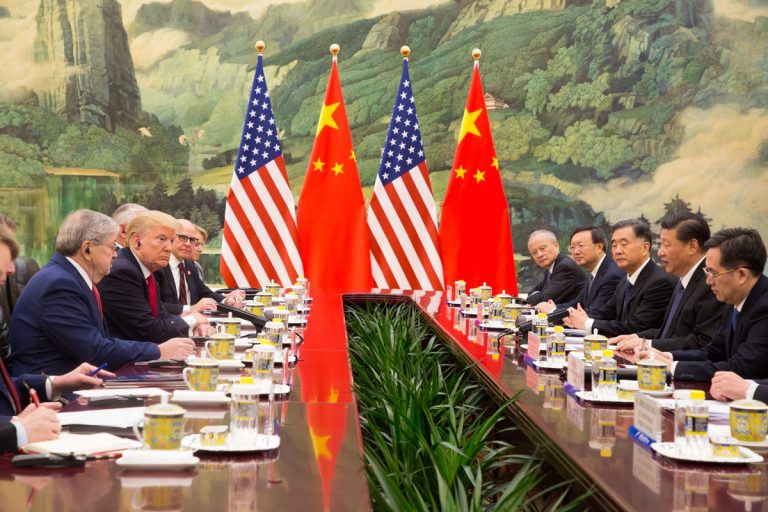
Many observers view the current confrontation on trade between China and the US as temporary. However, the two countries have opposed geopolitical imperatives that make it highly unlikely that a long-term solution will be found. The US will have to consider how to contain China, which is a far more formidable competitor than the Soviet Union ever was. The US will need much more than a Cold War-style “containment” strategy to counter Chinese ambitions. 
With Israel set to host an unprecedented meeting of the national security advisors of the US, Russia, and Israel, this week’s efforts by German FM Heiko Maas and Japanese PM Shinzo Abe to mediate between the US and Iran could prove to be but a sideshow. The meeting of the national security advisors, against the backdrop of Syrian and Russian forces pummeling Idlib, the last major stronghold of Syrian rebels, takes on added significance with strains emerging in relations between Moscow and Tehran.
The persistent affiliation of the American Jewish diaspora with the Democratic party – a party that is vocally and increasingly critical of Israel – raises concern over what will happen when the US eventually elects another Democratic president. When that happens, the gap between Israel and American Jewry, one of its most powerful and necessary diplomatic assets, will be even bigger than it is today.
Germany’s national antisemitism commissioner, Felix Klein, recently said, “I cannot advise Jews to wear kippot everywhere all the time in Germany.” Klein’s words, which prompted strong responses from the German authorities, revealed that the German legal system and police cannot guarantee Jewish freedom of expression in the public domain.

Accessibility Toolbar