Perspectives Papers

Perspectives Papers provide analysis from BESA Center research associates and other outside experts on the most important issues pertaining to Israel and the Middle East.

View Archive

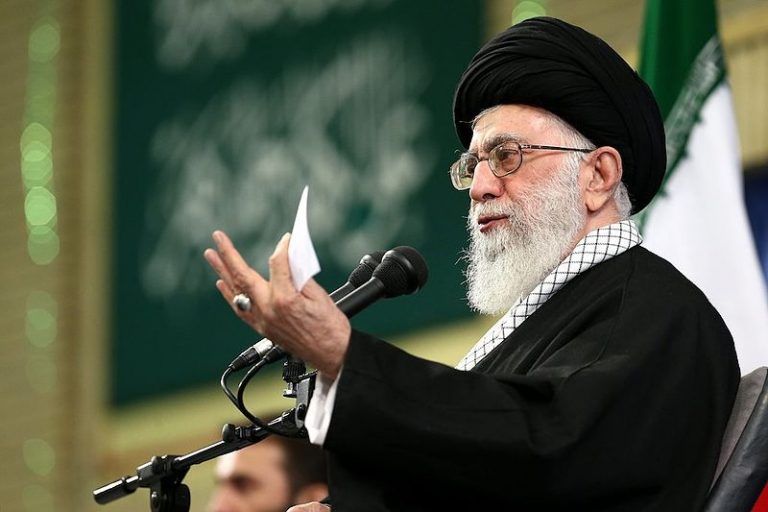
A heated debate is underway in Tehran over whether or not to remain in the JCPOA following the US withdrawal. President Rouhani believes the cost of leaving is too high, but hardline Iranian conservatives – who never wanted the deal to begin with – want out. It remains to be seen what Supreme Leader Ayatollah Khamenei will decide.
In December 2018, the Fundamental Rights Agency released a major survey on anti-Semitism in 12 European countries. Though flawed and not statistically representative, it draws many important conclusions. It confirms once again that anti-Semitism remains an integral part of European culture. While the findings do not mean the majority of Europeans are anti-Semites, they are nevertheless an indictment of Europe’s hypocrisy, pervasive anti-Semitism, non-selective immigration policies, widespread anti-Israelism, and huge discrepancy between the rhetoric of European leaders on fighting anti-Semitism and their actions.
Hamas has repeatedly threatened to disrupt commercial flights to Israel, a threat intended to deter Israel whenever a violent round of hostilities erupts. This threat hearkens back to the flight ban that was imposed on Israel during 2014’s Operation Protective Edge following a Hamas rocket attack on Yahud. While the flight ban was more a reflection of the Obama administration’s desire to put political pressure on Israel than a reflection of genuine safety concerns, Israeli decision makers do seem to consider the Hamas threat to Ben-Gurion Airport to be viable. In fact, it is more a propaganda message than a concrete threat.
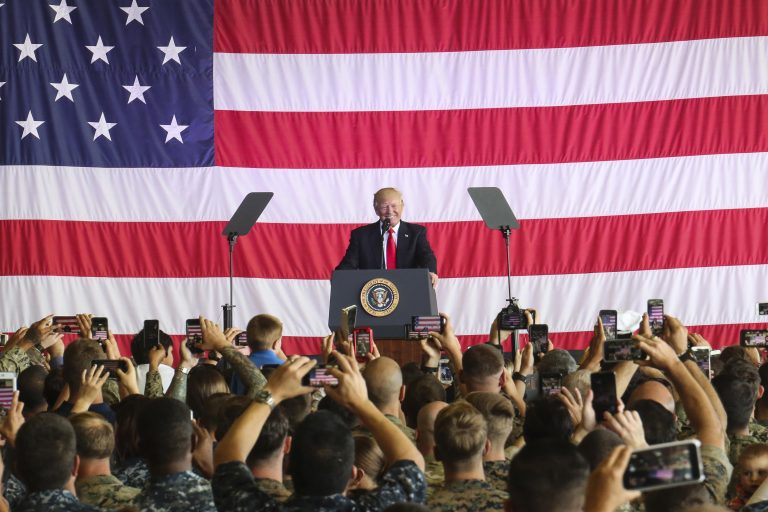
The Trump administration’s transactional doctrine appears to be based on Donald Trump’s personality and experiences, not on abstract theory about the behavior of states. According to that doctrine, successful relationships can be had with countries that share views regarding mutual benefit. Trump tramples norms that his predecessor, Barack Obama, sought to reinforce for the benefit of the international system and its servants. Obama’s doctrine, like Trump’s, was an emanation of his own personality.
The on-campus boycott, divest, and sanctions movement (BDS) has benefited greatly from the normalizing of anti-Semitism in the US and around the world. The American university is now in many instances a toxic environment for both students and faculty who have an open mind about Israel. Those faculty who risk their jobs, tenure, and grant funding to speak openly on Israel’s behalf need support now more than ever.
If and when the Palestinian Authority (PA) collapses, Jordan will bear the greatest brunt of the resulting humanitarian crisis. Such a collapse could be triggered by several factors, but will almost certainly lead to a mass exodus of Palestinians from Areas A and B. While Israel will probably opt for a minimalist containment approach, the government in Amman will have to choose: it can either come to the aid of the Palestinians in the territories, or it can allow them to enter Jordan for help. Israel and Jordan are both likely to favor the first option, which may then facilitate a solution to the problem of governance in the territories. 
Israel’s decisions a) to contain Hamas’s continuous provocations rather than use them as a casus belli and b) to refrain from an immediate military response to the discovery of Hezbollah tunnels into Israeli sovereign territory in the northern Galilee highlight the issue of deterrence as a core factor affecting the Israeli image in the region. Assuming the current Israeli modus operandi is the product of rational and thoughtful staff work, it can be inferred that deterrence is no longer either a decisive factor or even a strategic goal in the asymmetric conflicts with Hamas and Hezbollah.
The best known and most virulent full-time anti-Semite in the US is Louis Farrakhan, the long-time leader of the Nation of Islam. He attacks the Jewish religion and people as well as the State of Israel, using a broad array of classic anti-Semitic motifs, and has called Adolf Hitler a “very great man.” Though Farrakhan has spent decades inciting anti-Semitism, he is legitimized by his many interactions with prominent Americans. The First Amendment of the American Constitution does not allow for this hatemonger to be brought to court, a limitation that not only enables but even strengthens his anti-Semitism.

Accessibility Toolbar