Perspectives Papers

Perspectives Papers provide analysis from BESA Center research associates and other outside experts on the most important issues pertaining to Israel and the Middle East.

View Archive

It is not Gaza’s economic malaise that has precipitated Palestinian violence. It is the other way around: the endemic violence has caused the Strip’s humanitarian crisis. So long as Gaza continues to be governed by Hamas’s rule of the jungle, no Palestinian civil society, let alone a viable state, can develop.
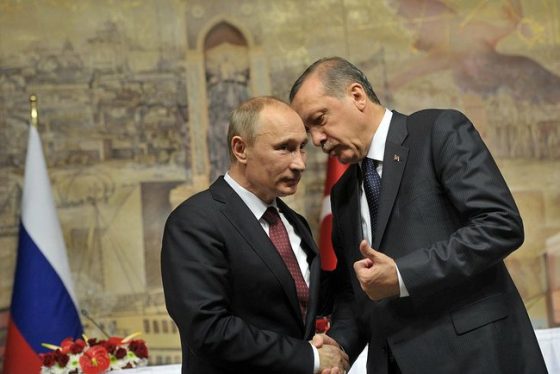
In theory, Turkey’s relations with Russia have never been brighter. However, behind the nice façade lie a deep ideological divide, mutual mistrust, and diverging regional interests. Eight decades after Atatürk’s “transactional” Soviet initiative, Turkey’s Islamist leaders are ironically following a similar line. For Erdoğan, Russia is not just a strong trading partner and the top supplier of Turkey’s energy. It is also the eastern ground of his political acrobatics with the Western world.
The Hashemite Kingdom of Jordan stands to lose more than any other party from the establishment of a State of Palestine. While the potential dangers and complications for Israel of such a state could be significant, Jordan would face threats to both its social stability and its foundational idea: that it governs the Arab population on both banks of its eponymous river. In addition to the substantial political and security difficulties such a state would create for Jordan, it could also jeopardize its continued viability by shifting the locus of political leadership for a majority of Jordanians away from Amman and towards Ramallah. 
US President Donald Trump’s staunch opposition to the nuclear agreement with Iran (the JCPOA) has sparked a serious transatlantic rift. The EU is, however, attempting to balance its appetite for business with an examination of security risks. In so doing, it is slowly awakening to Israeli and Sunni Arab sensitivities regarding Tehran’s hegemonic aspirations in the Middle East.
Most of the obituaries for the late Professor Richard Pipes, the doyen of America’s Russologists and President Ronald Reagan’s adviser, present an incomplete picture of this complex and unique scholar. Pipes, who died on May 17 at the age of 94, was not just an unrepentant, Polish-born, anti-Soviet hardliner like Zbigniew Brzezinski. He was also, like Henry Kissinger, a refugee from the Holocaust and a unique visionary. His work is relevant for students of both Russia and the Middle East.
Hamas did not achieve the goals it had in mind when it organized and set in motion the “March of Return” campaign. The organization would be wise to cut a deal with Gaza business community leaders and the civil bureaucracy that they administer the Strip while Hamas continues to police it, provided it refrains from fighting Israel. Maybe then Gaza could begin to tread a path towards a Singaporean vision.  
Radical sub-state actors are able to exercise full control of the territories they govern yet make themselves almost invisible when they choose to do so. As recent events in Gaza showed, this ability serves them not only on the military front but also in the arenas of diplomacy and public influence.

Accessibility Toolbar