Perspectives Papers

Perspectives Papers provide analysis from BESA Center research associates and other outside experts on the most important issues pertaining to Israel and the Middle East.

View Archive

Hamas wants Israel to supply it with electricity “or else”, but there is no reason why Israel should submit to Hamas extortion. It is not Israel’s obligation to satisfy the needs of a population that continues, through its ongoing support of Hamas, to pursue Israel’s destruction.
"America will not lead from behind. America First does not mean America alone. It is a commitment to protecting and advancing our vital interests…” So wrote President Donald Trump’s NSA, General H.R. McMaster, with Gary Cohn, head of the National Economic Council, in the Wall Street Journal. What follows is a discussion of US leaders’ failed strategies in several wars, Trump’s team of generals, and the emerging Trump doctrine, which is here termed “strategic savvy”.
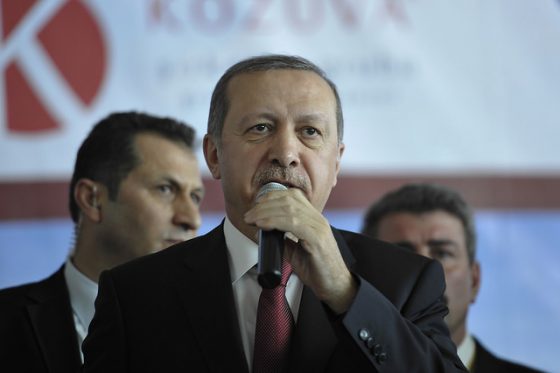
The siege of Qatar is sending messages on many wavelengths, some intended for Turkey. Sadly, Erdoğan is too ideologically blind to see that Turkey is standing on the wrong corner at the wrong moment. Doha may not be the same place after the Gulf Arabs find a way out of their crisis. A less Turkey-friendly Qatar may well emerge.
It is a widespread belief that Palestinian hopelessness feeds terrorism and the prospects for peace decrease it. This has always been false. In fact, the opposite is true: when Palestinians feel hopeless, Palestinian terrorism declines; when they are hopeful of gaining the upper hand, Palestinian terrorism increases. An Israeli iron fist is necessary to save both Israeli and Palestinian lives.
The German Chancellor’s daily routine has been attracting wide attention of late. Angela Merkel met recently with US President Donald Trump, followed by meetings with Indian Prime Minister Narendra Modi and Chinese Prime Minister Li Keqiang. Merkel expressed some of her colleagues’ thoughts after meeting Trump by saying, “Europe can no longer completely rely on its longstanding US alliance”. The timing of the Chinese visit, shortly after Trump’s visit, was not coincidental. China has a vision of joining forces with Europe to counterbalance the US, and President Trump’s reception in Europe made this vision more plausible.
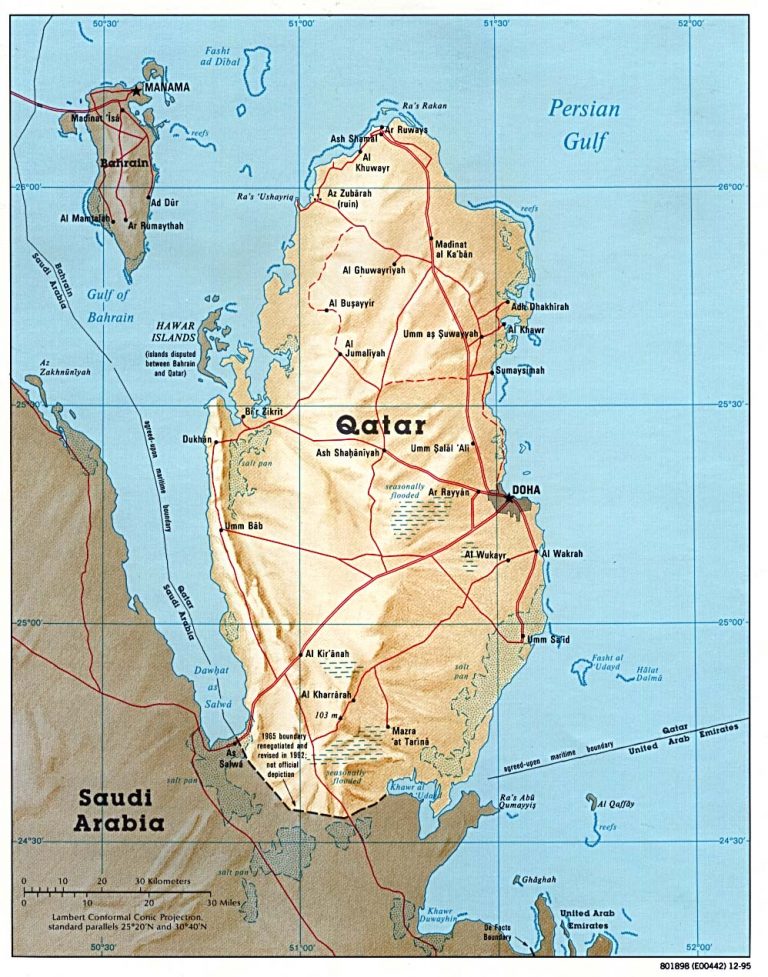
In the Middle East "game of camps", the Qataris have been playing a dangerous game for years. They have provocatively supported the Muslim Brotherhood and actively promoted the destabilization of existing regimes, using huge sums of money as well as the pernicious influence of Al Jazeera TV. The dramatic steps taken against them over the past few days are thus hardly surprising, but they shed some light on the present stage in the struggle for regional hegemony.
As North Korea continues its steadily expanding nuclearization, US President Donald Trump will have to prepare for extremely complex crisis diplomacy. Whether he decides upon a path of military preemption (what his lawyers would then call "anticipatory self-defense") or waits for a first move by Pyongyang, Trump will need to (1) make difficult judgments regarding enemy rationality and capability; and (2) consider a prudent posture of "pretended irrationality" for the US. His core task will be to pursue "escalation dominance" without simultaneously exposing the US or its allies to grievous attack.
Erstwhile Western Sunni allies (Saudi Arabia, UAE, Jordan) and a former Soviet client (Egypt) seem increasingly amenable to uniting in active defense against “Islamist extremists.” They share an adversary in Iran, which has tentacles in Iraq, Syria, Lebanon, Yemen, Oman, Bahrain, and Kuwait, as well as an unsavory history with North Korea and Pakistan. Prospects seem to signal potential for NETO, a Near East Treaty Organization (not a resurrection of CENTO, or an extension of NATO) that would embrace the span between the Eastern Mediterranean (including Israel), the Red Sea, and the edge of the Indian Ocean. Should such an organization materialize, it might well contribute to novel approaches to resolving the Palestinian-Israeli conflict.
Discounting the sincerity of Turkish President Erdoğan’s fiercely anti-western rhetoric ahead of the April 16 referendum is akin to disregarding bitter facts about once staunch NATO ally Turkey. NATO’s deepening “Turkey problem” is contained in the country’s Islamist ideology, conspicuous “un-likemindedness”, and democratic anomalies, which stand against NATO’s founding values of safeguarding freedom and the principles of democracy, individual liberty, and rule of law.

Accessibility Toolbar