Perspectives Papers

Perspectives Papers provide analysis from BESA Center research associates and other outside experts on the most important issues pertaining to Israel and the Middle East.

View Archive

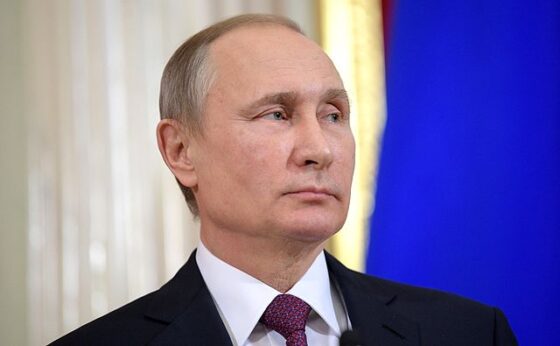
After four years of supporting Donald Trump, Russian President Vladimir Putin tried to curry favor with Joe Biden days before the US presidential election. He did this despite Biden’s sharp anti-Russian rhetoric and amidst the Democrats’ four-year-long accusation that Trump had colluded with Russia (with Biden himself calling Trump “Putin’s puppy”). Putin will never allow personal preference of one leader over another to override Russian national interests, and it is those interests that will dictate his diplomatic approach to President Biden.
On August 7, 2020, the number 2 figure in al-Qaeda, Abdullah Ahmad Abdullah (known as Abu Muhammad al-Masri), was gunned down in Tehran. Al-Masri’s very presence in Iran exhibited the close relationship Tehran has with the Sunni terrorist organization, and his slaying shows the weakness of Iranian counterintelligence. The regime’s frustration at this intelligence failure will likely be expressed through acts of violence. It will probably reform its counterintelligence community and may ask for assistance in this endeavor from both Russia and China.
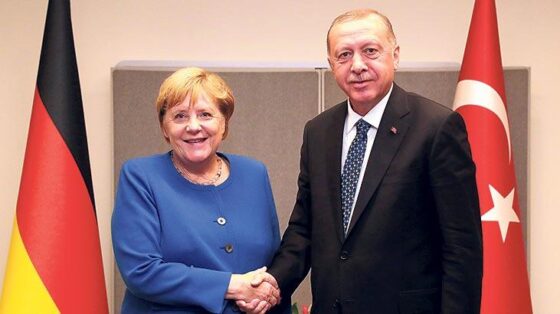
Turkey’s relations with Germany have always been privileged, but Angela Merkel took that relationship even further by treating Recep Tayyip Erdoğan as a protégé in the international arena. Their relationship strengthened in parallel with a significant increase in German-Turkish military and trade cooperation. But Merkel’s term is coming to an end, and there has been a noticeable shift in tone within the Berlin political establishment toward Ankara. The Turkish president will not be able to count on German benevolence forever.
A “mood swing” that negatively affected economic globalization started well before the COVID-19 pandemic broke out. When Donald Trump began his term as president in 2016, he established a more confrontational US policy toward China. From the former ”feel good” one-world attitude, the world has been moving toward more fragmentation. Uncertainty surrounding the pandemic is intensifying this process. The mood of anti-economic globalization will be strengthened further by a substantial increase in unemployment in Western countries.
It appears likely that Joe Biden will take office as president of the United States in January, and American allies will need to assess the implications. The reimposition of a revised Iran nuclear deal and reemphasis on the Israeli-Palestinian issue are to be expected, as is re-engagement with international organizations. Another likely factor is a diminishing of pressure on China. But the politicized nature of the American security state and the administration’s promised “Europeanization” of American laws and norms may also facilitate cooperation even as American corporate domination is promoted.
Relations between the US and the EU are expected to improve during the presidency of Joe Biden, but it is not yet clear whether the disagreements Europe had with Biden’s predecessor, Donald Trump, were about methods or substance. Washington and Brussels can work together on issues like climate change and can probably find synergies in international organizations, but their understanding of security challenges remains different. The most likely area in which they can cooperate effectively is the creation of a coordinated Western approach to the problem of COVID-19. 
The recent escalation of tensions in the Aegean has the potential to strengthen the political bond between Greece and its Western allies, as well as force the EU to shift from threatening sanctions on Turkey to actually imposing them. Turkish president Recep Tayyip Erdoğan will try to keep tensions high enough to present a heroic front to his Islamist/nationalist base but not high enough to trigger EU sanctions.
The Nagorno-Karabakh conflict has become an important component of Turkish foreign policy. Over the years, Ankara’s support for Baku has grown exponentially. Diplomacy was an element of this support, but more significant was the dispatch of sophisticated weaponry. Greater support for Azerbaijan coincided with Turkey’s more active foreign policy in the Middle East and the Mediterranean, and is now strikingly different from Ankara-Baku relations of the 1990s and even the early 2010s. The reason for Ankara’s assertiveness could be access to energy and trade routes.

Accessibility Toolbar