
Perspectives Papers

Perspectives Papers provide analysis from BESA Center research associates and other outside experts on the most important issues pertaining to Israel and the Middle East.

View Archive

As the next decade approaches, the US stands at a historic crossroads regarding both domestic and foreign issues. The 2020 presidential and congressional elections will to a large extent determine whether the current trends of populism, polarization, and incitement coursing through American society, and of withdrawal from international leadership, will continue or come to an end; whether the phenomenon of “Trumpism” will persist or be remembered as an aberration; whether the political and ideological gaps between Democrats and Republicans that have paralyzed the administration will narrow; and whether the economic boom of the last few years will go on or the US will enter a recession. Demographic shifts are changing the face of the US, and in the course of the decade they will have a significant impact on major political, social, and economic issues.  
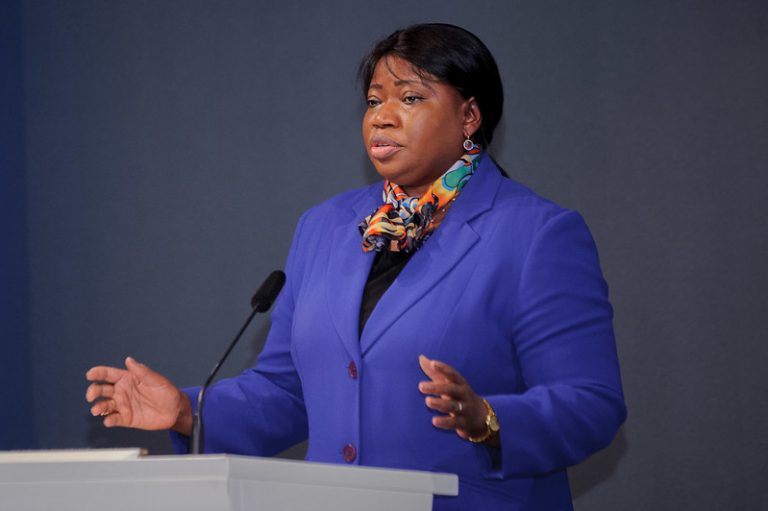
Fatou Bensouda, the chief prosecutor of the International Criminal Court (ICC) at the Hague, has decided to indict senior Israeli policymakers and military officers for committing war crimes in the West Bank and Gaza. Her decision is baseless, preposterous, and discriminatory, and it violates the ICC’s own mission and rules. Bensouda’s action should be placed within the wider context of the Palestinian disinformation, delegitimization, and demonization campaign against Israel at international organizations. Israel should discredit and delegitimize the ICC in turn via aggressive political measures and collaboration with concerned liberal democracies, primarily the US.
David Ben-Gurion understood that a state is much more than a legal entity and that the uniqueness of Israel fosters an inherent tension between the state as an organized institutional mechanism and the state as an instrument in a national process of redemption. Hence he believed that, even after its establishment, Israel would continue to be a “state in the making,” a means toward the fulfillment of an endless vision.
The pending Chinese acquisition of a stake in Tajikistan’s aluminum smelter, coupled with earlier tax concessions to Chinese companies that would substantially reduce the trickle down effect of investments for the troubled Tajik economy, suggest that China has yet to fully take into account frequent criticism of its commercial approach to Belt and Road-related projects.
If antisemitism is to be fought effectively, three priorities have to be set.  First, the Israeli government should establish an anti-propaganda agency. Second, an effort must be made to achieve a broad recognition that antisemitism is an ancient and integral element of Western culture. Third, there should be a consistent exposure of Jewish masochists who claim that Israel alone has to be perfect while others do not.
Wahhabism is a fundamentally violent doctrine of Islam. It teaches that people fall on one of two sides: the Wahhabis, the chosen who will ascend to heaven; and the rest of humanity, including all other Muslims—all of whom are infidels who are to be hated, persecuted, and even killed. Wahhabis have killed people in Algeria, Afghanistan, Iraq, Syria, London, New York, and now Pensacola. Their essential, intractable violence must be acknowledged if it is to be effectively dealt with.
Impeachment hearings in the US have overshadowed important geopolitical developments in Eurasia that will affect Washington’s position in 2020 and beyond. The US’s failure to improve relations with Seoul and Tokyo strengthens China’s position in the Asia-Pacific. Similar processes are unfolding around Ukraine, where Kyiv might—in the absence of US support—be pressured into accepting Russian demands on Donbas.
The British election returned a resounding mandate to the Conservative Party and decimated the antisemitism-wracked Labour Party. Labour leader Jeremy Corbyn was exposed as unlikeable and incompetent, and as the facilitator of a massive upswing in antisemitism within the party—all of which was rejected by voters. The lesson for the US Democratic Party is that punitive leftism and overt antisemitism are unacceptable, though divisions within the American Jewish community mute that message. For Israel, the lesson is to try to remain as bipartisan as possible, though that won’t be easy.

Accessibility Toolbar