
PSCRP

Zelensky and Aliyev (AI generated)
Volodymyr Zelensky’s April 25 visit to Gabala and his joint appearance with Azerbaijani President Ilham Aliyev produced six bilateral agreements spanning defense, energy, and trade — and positioned Baku as a prospective venue for trilateral Ukraine-Russia-U.S. negotiations. The episode crystallized a broader realignment already underway in the South Caucasus, one that Russian state media, wire services, and pro-war commentators struggled to process with composure.
South Ossetia
On January 1, 2026, a quiet but politically charged institutional death took place in Georgia: the Provisional Administration of South Ossetia - formally titled the Administration of the Temporary Administrative-Territorial Unit on the Territory of the Former Autonomous Region of South Ossetia  - ceased to exist as a legal entity. The abolition was the culmination of legislation adopted by the Parliament of Georgia on December 17, 2025, by a unanimous vote of 83 deputies, all from the ruling Georgian Dream party. This article examines the decision, its legal and administrative mechanics, its place in Georgian domestic politics, and its broader strategic implications.
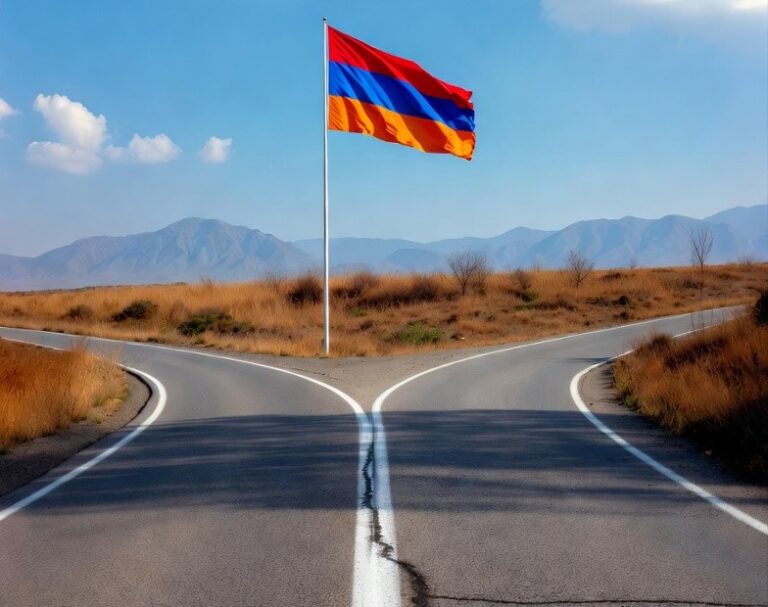
The Kremlin’s Open Season on Pashinyan (AI generated)
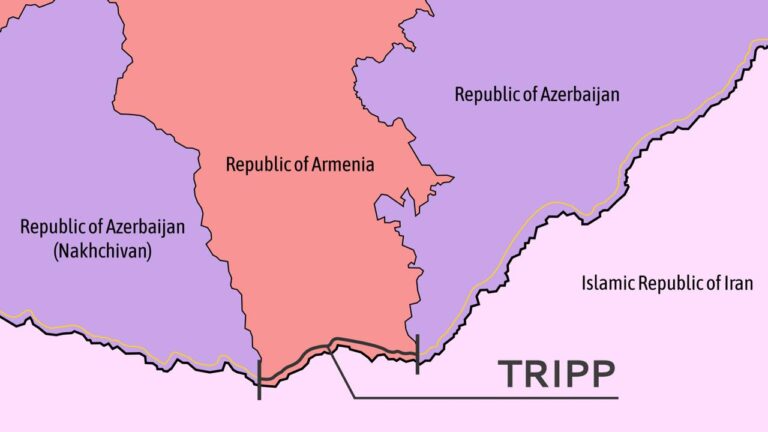
With Armenia’s parliamentary election set for June 7, 2026, Moscow has moved beyond its customary displeasure with Yerevan and into something resembling an all-out campaign to remove Prime Minister Nikol Pashinyan from power. The tools are familiar — state media invective, economic threats, curated street protests, and electoral interference — but the intensity is not. What makes the moment additionally curious is that Moscow’s talking points on the U.S.-brokered TRIPP corridor are being faithfully echoed by parts of the Armenian-American diaspora.
Ukrainian and Belarus opposition flags
Several international media outlets have euphorically portrayed the first official meeting between Ukrainian President Volodymyr Zelenskyy and Belarusian opposition leader Sviatlana Tsikhanouskaya in Vilnius on January 25, 2026, as a fundamental moral shift in Kyiv’s stance toward the Belarusian opposition – from strategic distance to meaningful cooperation. Several interpretations presented the alleged motives behind Ukraine’s adapted policy toward the Belarusian dissidents, while ignoring the argumentative weak spots within them. This analysis reassesses the so-called “first official” Zelenskyy-Tsikhanouskaya Meeting and it presents interpretations not mentioned yet in the public discourse.
Antisemitic caricature (AI generated)
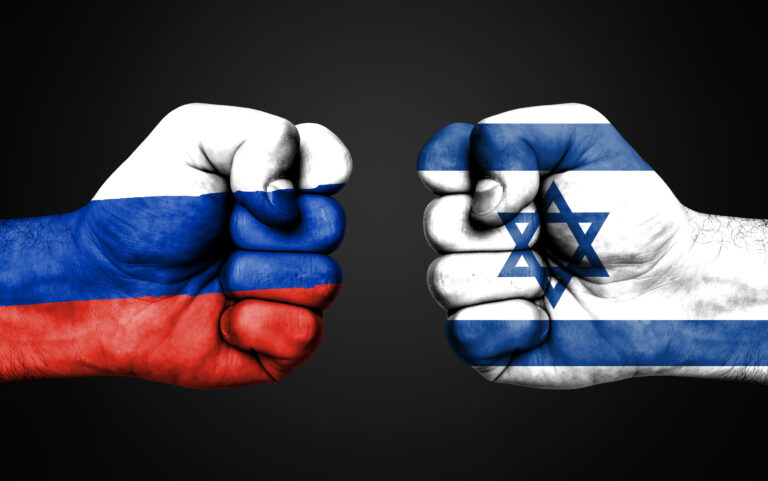
The commencement of Operation “Rising Lion” on June 13, 2025, triggered a subsequent wave of intensified hostility, synthesizing: classical antisemitic motifs, conspiracy theories, and state-aligned political propaganda. Notably, this period marked the first instance in which anti-Israeli hate speech in the post-Soviet sphere exhibited clear evidence of coordinated external influence.
In the situation described above, a wide range of anti-Israeli and anti-American stereotypes have spread widely across social media. Numerous videos portraying the alleged “successes” of Iranian strikes against Israel and American forces have circulated widely, particularly in the Tajik-language online environment. More broadly, Iranian propaganda describing supposedly massive losses suffered by the United States and Israel tends to resonate with certain groups within the Central Asian segment of the internet, especially since it is often amplified by channels associated with Islamic fundamentalism or with Russian media networks. At the same time, it should be noted that a significant number of Russian propagandists, who are well-known in Central Asia, have publicly distanced themselves from Iran and emphasize that the war is economically advantageous for Moscow.
Belarus flag (AI generated)
Belarus is an unusual place to consider in the context of the Middle East. Three Israeli presidents were born there, while Belarus itself has had only one president since independence. The Aliaksandr Lukashenka regime in Minsk is well aware of this historical connection and sometimes references it as another convenient talking point rather than a foundation for genuine engagement. Thus, this awareness does not translate into any meaningful support for Israel in its current struggles. The current war in Iran is framed by the Lukashenka administration and its state media through the familiar lens of anti-Western rhetoric and selective moral posturing.

Accessibility Toolbar