PSCRP

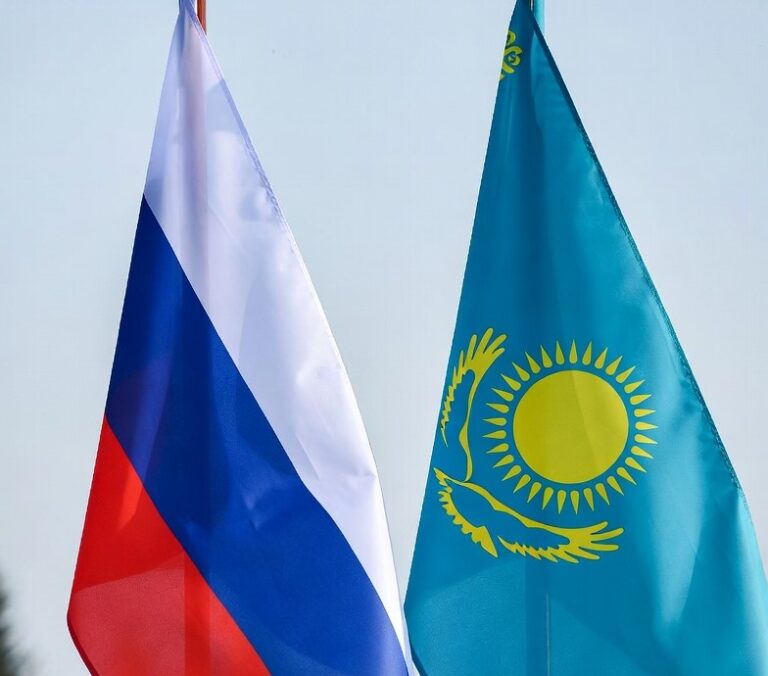
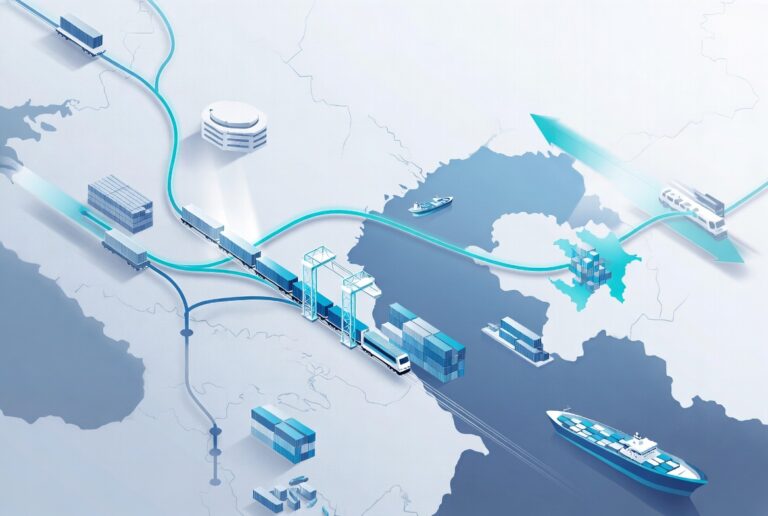
The military operation launched by the United States and Israel against Iran on February 28, 2026 may create serious economic challenges for the countries of Central Asia, particularly in the sphere of transportation. The war has significantly disrupted the functioning of two key transport corridors: the International North–South Transport Corridor (Russia – Caspian sea – Iran – India) and the southern branch of the Eurasian East–West transport corridor passing through Iran. This is unfolding against the backdrop of ongoing hostilities in the Black Sea region, which have already had a negative impact on transport routes linking the region with Europe.
Security dynamics around Iran are shaped not only by material capabilities but by perception — both within the Islamic Republic and among neighbouring states. Narratives of internal crisis, ethnic vulnerability, and external encirclement increasingly influence strategic behaviour, generating real geopolitical consequences regardless of whether fragmentation ultimately occurs
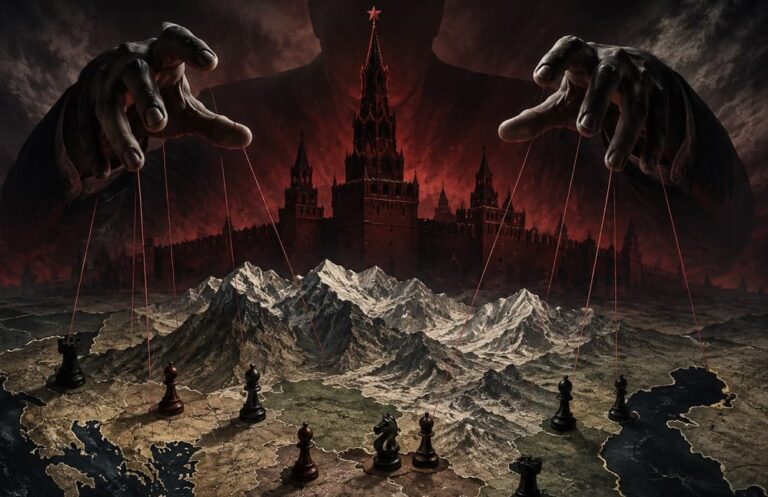
War in Iran (AI generated)
By the time of this writing, the Israeli and US military operation “Lion's Roar/Epic Fury” against the fundamentalist ayatollah regime in Iran had passed its eighth day. The strategic objective of this operation would be either the collapse of the Iranian regime or the infliction of such severe damage that it would be unable to restore its military and geopolitical capabilities for a long time. This strategy relies heavily on targeting the leadership.
IRGC logo (AI generated)
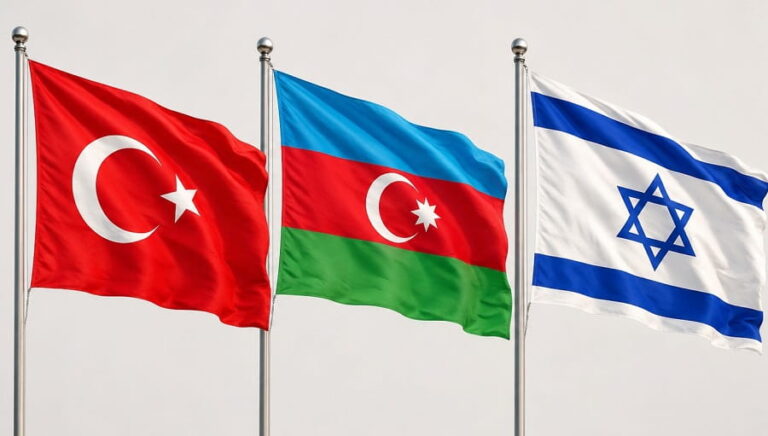
By inciting Azerbaijan, and consequently Turkey, the regime is initiating a riskier strategy. Yes, there is an economic component: a strike on the Baku-Tbilisi-Ceyhan pipeline would further drive up oil prices, threaten Israel's energy security, and complicate the situation in Turkey. In addition, it creates a threat to the "Trump Route for Peace and Prosperity" project through the Zangezur Corridor. But this remains a secondary objective.
Azerbaija-Armenia road (AI Generated)
The February 2026 visit of U.S. Vice President JD Vance to Yerevan and Baku — the first time a sitting American vice president has set foot in either country — marks the consolidation of a deliberate strategic reorientation. Washington is moving to establish a durable presence in the South Caucasus at a moment when Russia’s credibility as a regional security patron has collapsed and Iran’s leverage over transit routes is under pressure. For Armenia, long considered Moscow’s most reliable client in the region, the moment is one of unusual and consequential opportunity.
Monitoring (AI generated)
January turned out to be a positive surprise: the speed of global transformations, the emergence of new configurations of interests, and new roles for seemingly traditional actors were fully on display across the post-Soviet space. And researchers felt it too, clearly revising their plans in favor of greater topicality and a demand for a strategic look from the standpoint of today and the near future.
A. Lukashenko (AI generated)
Lukashenka’s 2025/26 Middle East and North Africa tour illustrates enduring patterns of Belarusian foreign policy under his rule: the instrumentalization of diplomacy for international legitimacy, a highly personalized decision-making style centered on the ruling family, and proactive—often disruptive—efforts to secure relevance in global affairs. By situating the trip within Minsk’s broader diplomatic behavior, the analysis argues that Belarus should not be dismissed as a passive Russian proxy but understood as an autonomous spoiler capable of shaping regional dynamics. These features carry direct implications for Israel and Europe, particularly regarding Iran, sanctions evasion, and emerging security alignments.
The European Union’s 20th sanctions package marks an unprecedented escalation: for the first time, Brussels is targeting a port in a country that holds EU candidate status. Georgia’s Kulevi terminal, now implicated in facilitating Russian oil shipments, encapsulates a broader transformation underway in Tbilisi — one that is steadily converting a once-promising candidate for European integration into a facilitator of sanctions evasion for Moscow.

Accessibility Toolbar