PSCRP

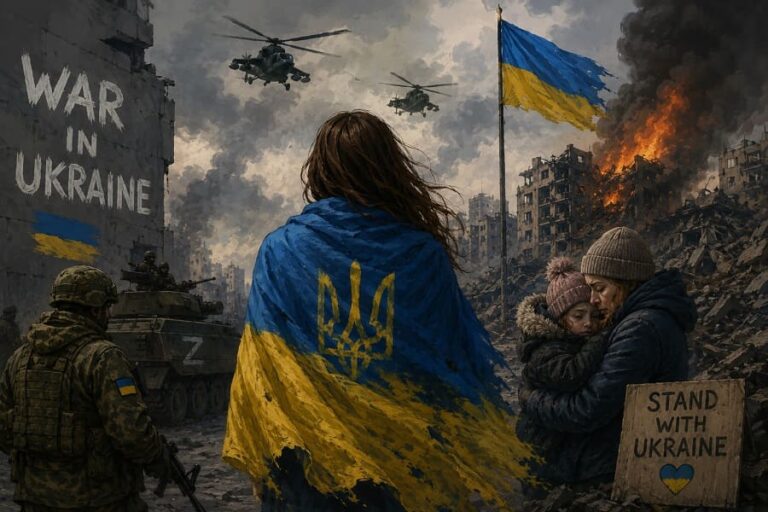
Forged in missile strikes, blackouts, and relentless air-raid sirens, Ukrainian society has adapted to life inside a war with no visible end — but not without deep psychological scars. Drawing on years of travel across Ukraine and engagement with refugees abroad, the report traces the rise of collective post-trauma, hardened attitudes toward Russia, and the growing sense of shared destiny with Israel as two democracies under siege. Beneath the surface resilience, however, lie widening internal divisions that may shape the country long after the guns fall silent.
Kazakhstan is rewriting almost its entire Constitution—and the stakes go far beyond parliamentary mechanics. Behind the talk of a unicameral legislature and a vice presidency lies a carefully staged power transition, a recalibration of foreign dependence, and a quiet effort by Kassym-Jomart Tokayev to secure his post-presidential future without leaning on Moscow. This overhaul may redefine not only who governs Kazakhstan, but who ultimately guarantees that power.
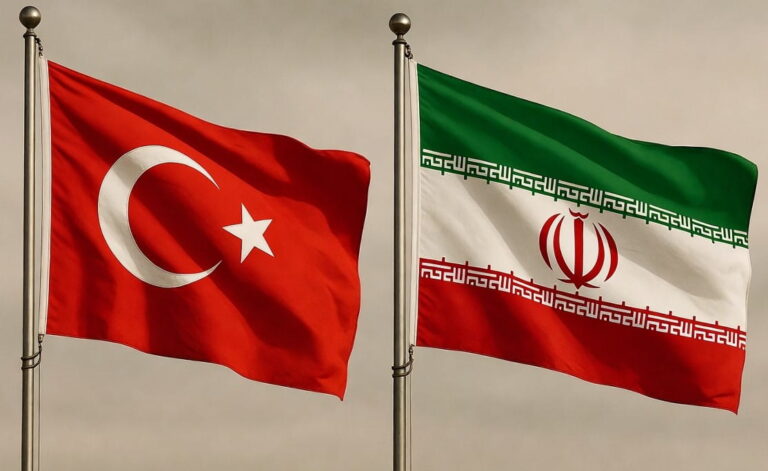
Iranian flag
In recent analyses of the post-Soviet space, a persistent analytical gap remains between how Israeli–Azerbaijani relations are typically described and how they are perceived in Tehran. Most studies portray this partnership as pragmatic and transactional, largely confined to military-technical cooperation and limited in its implications for regional security beyond the South Caucasus. Yet such interpretations fail to explain the intensity and persistence of Iranian strategic anxiety toward Azerbaijan’s cooperation with Israel.
Iran protest (AI generated)
At the end of 2025 and the beginning of 2026, Iran was gripped by mass public protests unprecedented in recent decades both in scale and in the level of violence. They began as a reaction to the most severe economic and environmental crisis in the country’s history, which reached its peak by January 2026, but within a few days evolved into an anti-government political movement. At the time of writing, it is still impossible to determine whether the leaders and participants of the protests will succeed in overthrowing the fundamentalist regime of radical Shiite Islamists, or whether the authorities, as in the past, will manage to suppress the burgeoning revolutionary process.
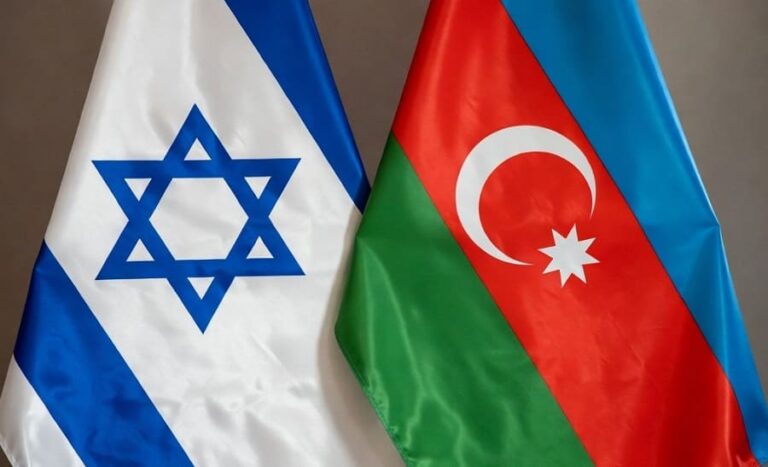
Flags of Israel Kazakhstan and Azerbaijan (AI generated)
Since gaining independence, the Central Asian states have maintained a position of neutrality toward Israel. Following Kazakhstan’s accession to the Abraham Accords on 6 November 2025, Israel may find itself presented with an opportunity to significantly expand its diplomatic presence in both Central Asia and the Caspian Basin (after Azerbaijan joined the “Central Asian Five” in 2025, the two spaces may reasonably be viewed as a single international region — a point that will be elaborated below). It is therefore worth examining how Israeli diplomacy has begun to make use of this emerging “window of opportunity” and what potential trajectories might exist for Israel’s foreign policy in this context.
Vietnamese Gastarbajter in Russia -AI Generated
Legal labor migration has become a defining political dilemma for aging societies, and Russia’s search for solutions reveals striking historical parallels. Tracing the half-century formation of the Vietnamese diaspora, the report shows how policies designed for temporary labor repeatedly produced permanent communities instead. The experience of “Russian Vietnam” challenges current assumptions that migrants from the “far abroad” will simply work, leave, and leave no lasting imprint.
Monitoring (AI generated)
Not only the events and news of the newly begun year have their roots in 2025. The research and academic publications from December that we present to our readers in the January monitoring issue are also grounded in the past—but have a clear projection into the future. As usual, this issue offers readers unexpected research methods, new academic centers, authors whose work we have not previously covered, and other substantive discoveries.
Lithuanian national Radio and TV (printscreen of the webpage)
The recent developments around Lithuania's public broadcaster, LRT, caught a lot of attention both within the country and internationally. The situation runs deeper than just legislative efforts to reform LRT's management. On one hand, this issue largely reflects the effects of the extreme plurality of the country’s political system. On the other hand, it also shows how the Lithuanian public perceives its national broadcaster.

Accessibility Toolbar