PSCRP

Wildberries
In continuation of the conflict surrounding Wildberries, on October 10, 2024, the head of Chechnya, Ramzan Kadyrov, accused Senator from Dagestan, Suleiman Kerimov, and two State Duma deputies, Bekhan Barakhoev and Rizvan Kurbanov, of plotting to assassinate him. The statement was made during a meeting with representatives of Chechnya’s security forces. Kadyrov claimed there were witnesses who confirmed an attempt to arrange his murder. He also demanded that the named individuals prove to him that they were not involved in the assassination plot. Otherwise, he threatened them with blood vengeance.
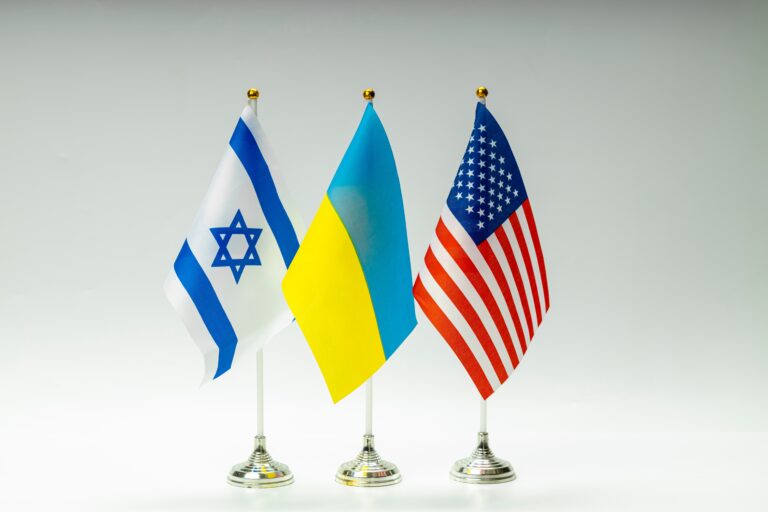
By the beginning of the 19th century, Ukraine was home to one of the largest Jewish communities in the world, which played a huge role in the Jewish national revival movement that culminated in the creation of the State of Israel. Suffice it to mention the names of prominent cultural, political and military figures of the Jewish state born in Ukraine to understand how great is the historical influence of Ukrainian Jewry on modern Israel.
The war in Ukraine has substantially weakened Russia's position in Central Asia and the Southern Caucasus, requiring an increasing amount of resources to sustain. Iran is endeavoring to fill the power vacuum that Russia left in these post-Soviet regions while simultaneously exercising caution to prevent conflict. Tehran is committed to the economic integration of the post-Soviet republics in these regions, with an emphasis on fortifying its relationships with the Eurasian Economic Union.
Flag_of_the_Chechen-Ingush_ASSR
On September 18, official Russian media reported about a shooting in the heart of the Russian capital, near the head office of Wildberries, Russia’s largest online marketplace. It was a violent attempt to seize assets in the style of the 1990s — a brief period of relative democracy in Russia, marked at the same time by wars between armed gangster groups vying for spheres of influence. Russian media abroad immediately rushed to declare the “return of the wild 1990s” as one of the consequences of the Russian-Ukrainian war.
The US and the Caucasus (AI Copilot)
Recently, there has been more and more talk about a multipolar world: the U.S. hegemony established after the Cold War is allegedly over, and the country can no longer claim global domination. This is a delusion— the U.S. still surpasses all other countries in terms of resources, finance, technology and military power. However, to maintain this leadership, it must hold its ground in all these areas.
Despite their disagreements, Russia and Iran currently have more reasons to cooperate than not. For one, both are waging wars against the West whether directly or through proxies. If either one of those conflicts were to be solved, then the West’s attention could be focused solely on the other.
The Russian Federation is a federation in name only. At the initiative of President Vladimir Putin, in December 2004, the Russian Federation adopted a law abolishing the direct election of regional governors. Since then, their candidacies were proposed by Vladimir Putin and formally approved by the legislative bodies of the respective “entities”. In April 2013, during the presidency of Dmitry Medvedev, similar legislative amendments were introduced for “ethnic constituent entities of the federation,” primarily republics. In July 2018, at the initiative of returning President Vladimir Putin, federal legislation was amended to abolish the compulsory study of local languages that are nominally “state” languages in “ethnic constituent entities of the federation”. At the beginning of 2020an amendment was made to the Constitution of the Russian Federation, according to which “The Russian language shall be the State language on the entire territory of the Russian Federation as the language of the state-forming nation”. Thus, the fact that the Russian Federation sees itself not as a federation of peoples and regions, but as a unitary Russian nation-state was put into law.

Accessibility Toolbar