PSCRP

Georgia applied for EU membership alongside Moldova on March 3, 2022. In June of the same year, the European Commission recommended granting candidate status to both republics, but the decision on Tbilisi’s application was postponed. Georgia ultimately received candidate status in December 2023. Yet, on November 28, 2024, the Georgian authorities announced their decision to suspend EU accession negotiations from the national agenda until 2028. What happened?
Erzyan national flag
The Erzyan national movement deserves special consideration: the problems it is trying to solve are characteristic not only of the Republic of Mordovia. They are also relevant for other national autonomies located in the east of the European part of the Russian Federation, far from the state borders, where the peoples belonging to the Finno-Ugric linguistic group live: the Republic of Komi, the Republic of Udmurtia and the Republic of Mari El.
Belarus is the only post-Soviet country whose national language has been losing its positions over the decades that followed the collapse of the USSR. At the same time, it is the only post-Soviet state other than the Russian Federation where Russian has the status of the state language (in Kyrgyzstan, Russian has the status of “official” but not the state language).
Illustration (AI generated)
For the last month, numerous US and Israeli publications mulled the initiative to integrate the Republic of Azerbaijan into the Abraham Accords. In our two previous papers on the issue, we described how deep the relations between Baku and Jerusalem are and brought up several recommendations on how to effectively engage Azerbaijan in Trump’s regional plans and for the sake of Israel’s interests.
Chinese fright train (AI generated illustration)
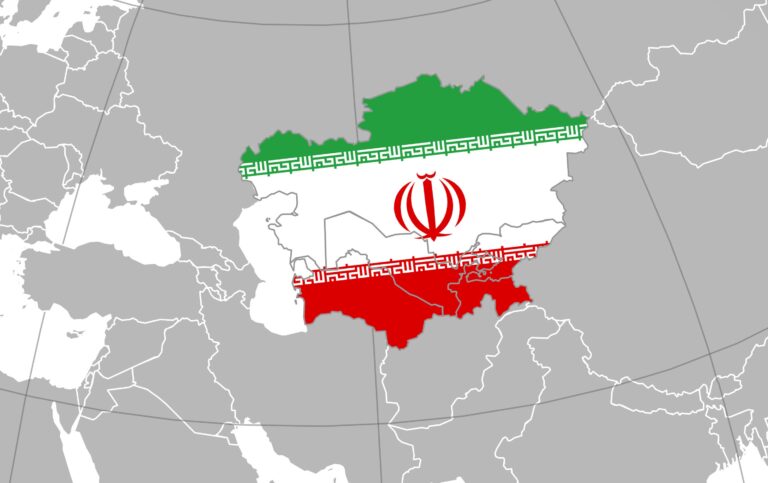
Russia, which a dozen years ago aspired to be a major transportation corridor from the Pacific to the Atlantic, is gradually turning into a transportation and logistics desert. The new joint Chinese-Kazakh railroad project has become another stepping stone to exclude Russia from transcontinental logistics chains. At that, Russia loses not only Europe and the Far East as customers and partners: it also loses its leverage in the region it used to consider its fiefdom - namely, Central Asia.
AI generated illustration (Grok)
February is a time of plenty for the researcher of intellectual and academic thought. Publications are published that did not find a niche in the editorial plans of the previous year; yearbooks appear for which the publishers hold back the most interesting materials. This issue, unlike the previous one, talks more about conflicts within the states of the former USSR - cognitive, interethnic, interreligious and even ideological.
A year and a half ago, in the summer of 2023, a forum titled "Yakutia and the Provinces of China: Sister-City Relations for Strengthening Russian-Chinese Relations" was held in Yakutsk. The ties between China and the Republic of Sakha continue to strengthen. It is also worth noting that directly south of Yakutia are Russian regions to which China has almost openly laid claim, as they were once part of the Qing Empire. From the Chinese perspective, Russia still occupies much larger Chinese territories, meaning historical justice has not been restored.
The US and the Caucasus (AI Copilot)
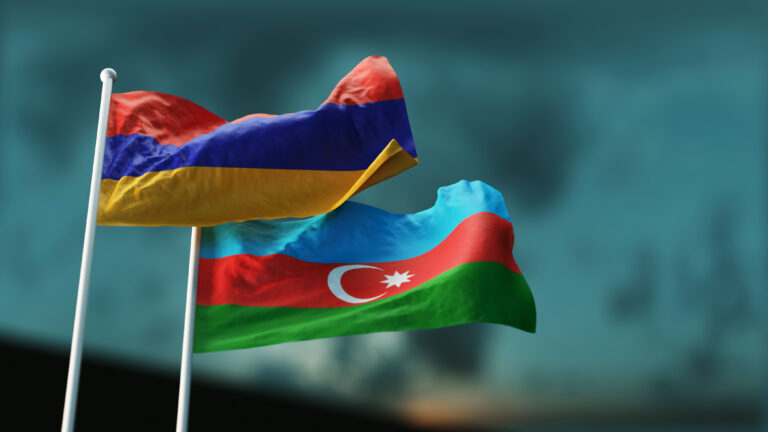
The countries of the South Caucasus have approached Trump's presidency under vastly different circumstances, which is unsurprising given that this region has never been geopolitically unified. Until recently, Georgia appeared aligned with the West, Armenia with Eurasia, and Azerbaijan with Central Asia. The situation changed after 2020, when the 44-day war forced both Azerbaijan and Armenia to confront geopolitical realities, culminating between September 2023 and March 2024. The events of this brief period have presented the region’s countries with urgent challenges demanding immediate solutions.

Accessibility Toolbar