PSCRP

The Hamas attack on Israel triggered a wave of antisemitism in the South Caucasus and Central Asia. The root causes of this surge are similar: anti-Israeli propaganda in Russia (which is anti-liberal and anti-Western in nature) and in the Islamic world (usually of a specifically religious nature), as well as in the West (typically taking on an extreme leftist nature).
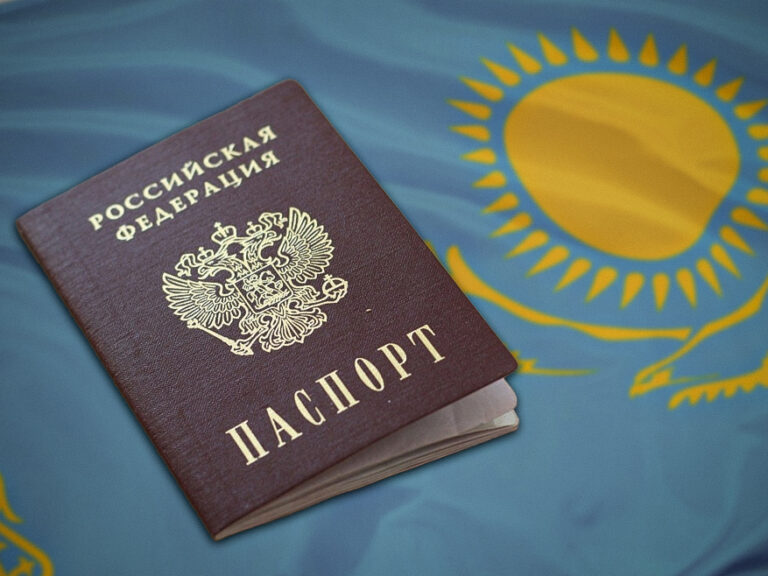
Russians in Kazakhstan
In the months after 21 September 2022, when the Kremlin announced military mobilization, nearly a million Russian citizens entered Kazakhstan; though, two-thirds had already left the country before January 2023.  The reason for the unexpected rise in popularity of migration to the Central Asian state was that Russian citizens do not need a visa or even a “foreign travel” passport to go there.
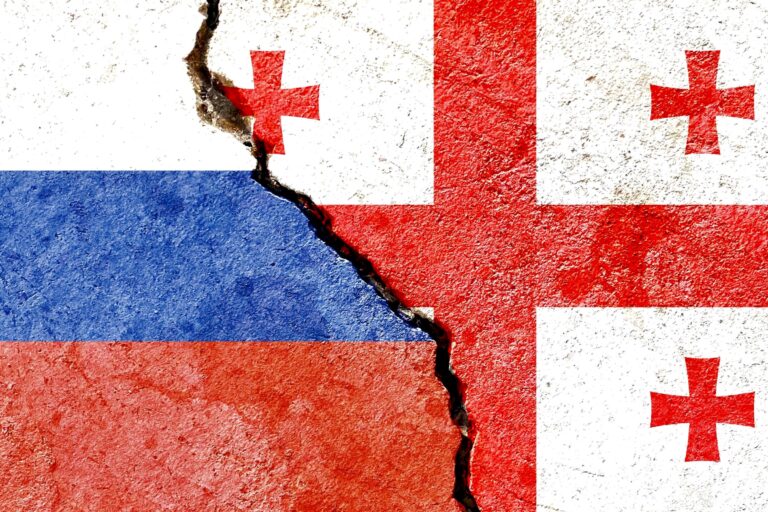
Georgia is a very important element of Russia's connection with the global South, and in informational terms, working relations with Georgia are an extremely convenient element for Russian propaganda, unlike relations with Ukraine. The main goal of the Russian Federation in its relations with Georgia is to keep Georgia in the ecosystem of Russia's survival under sanctions.
IDF OPERATION
The resulting IDF's Iron Swords Military Operation has caused, as usual, an outburst of anti-Semitism around the world. However, unlike previous military confrontations with terrorists, this time the world's anti-Semitic reaction to Israel's actions was not only much stronger, but also affected countries and regions that usually refrain from displaying violent anti-Israeli rhetoric and positions.
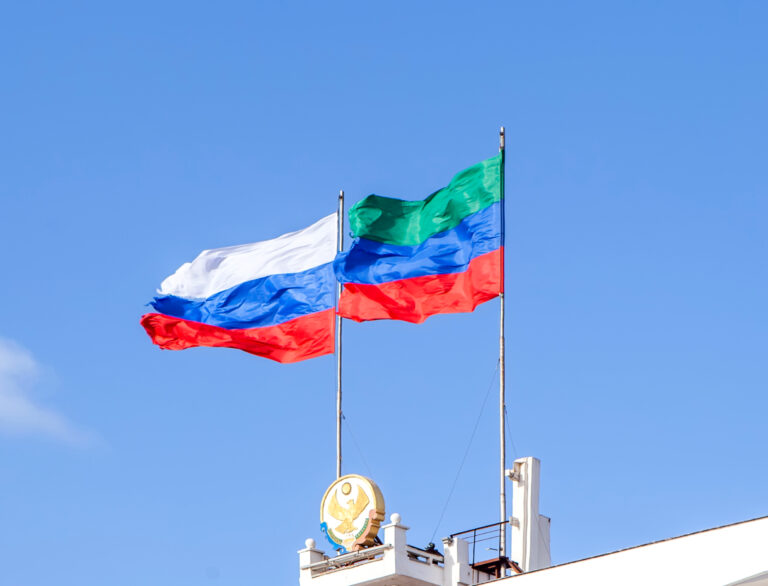
The majority of Russian commentators agree that the events occurred as a result of mounting mass dissatisfaction in the North Caucasus, with the Jews and Israelis as a formal pretext for the events. However, there are also attempts to determine the actions of specific players who may have intentionally organized  pogroms in the Northern Caucasus. Some of these hypotheses are of a propagandistic nature, while others require more in-depth analysis if sufficient supporting arguments can be found.
The issue of political representation of the Russian (or rather, Russian-speaking) minority, who comprise ca. 24 percent of the population, has been a challenge for Estonia since the re-establishing of independence in 1991. Even though some sources tend to exaggerate the problem of non-citizenship in Estonia, only 20 percent of the local Russians have so-called “alien’s passports.” Moreover, even non-citizens are allowed to vote in the municipal elections.
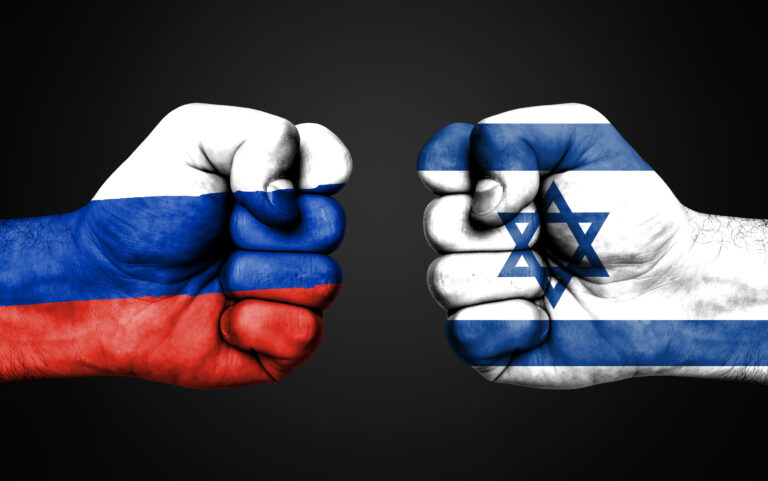
One cannot fail to notice that the conflict between Israel and Palestinian Arabs occupies a distinct place in the ideological and political discourse accompanying post-Soviet armed conflicts, primarily the Russian-Ukrainian and Armenian-Azerbaijani conflicts. This can involve the use of allusions and symbols associated with the Palestinian-Israeli confrontation, aimed at ideologically justifying one's position and demonizing the opponent. It also pertains to the attempts of direct participants in post-Soviet conflicts and/or external actors to leverage fluctuations in Israel's relations with the "Palestinian National Authority" (PNA) in Ramallah, which governs the Arab enclaves in Judea, Samaria, and the Jordan Valley (or, the “West Bank of the Jordan River”, in international discourse) on one hand, and the enclave of Islamic fundamentalists in the Gaza Strip on the other.
Accessibility Toolbar