


































Armenian memory is tolerated because suppressing it would alienate a loyal and historically integrated community; Armenian genocide recognition is withheld because granting it would cost more than it would gain. The community is permitted to remember. The state declines to confirm. This equilibrium becomes considerably more complex — and analytically more revealing — when placed alongside Iran's position on the Holocaust. Here the Islamic Republic has not chosen strategic silence. It has chosen active denial.
Read More...Emil Avdaliani specializes on former Soviet space and wider Eurasia with particular focus on Russia’s internal and foreign policy, relations with Iran, China, the EU and the US. He teaches history and international relations at Tbilisi State University and Ilia State University (Georgia). He has worked for various international consulting companies and regularly publishes various works with BESA on military and political developments across Eurasia. He can be reached at [email protected].
(Ph.D. Bar-Ilan University) Specializes in modern Turkey, Turkish history, and the Islamic-spiritual Gulen movement. Senior lecturer in the Dept. of General History at Bar-Ilan University and a research associate at BESA. Email: [email protected]
Dr. Shay Attias is a worldwide expert for Diplomatic Studies & International Communications who coined the notion of “Peer-Peer-Diplomacy Network.” His pioneering research of “Global Citizens & Digital Diplomacy” describes the latest development in diplomatic practice, wherein civilians, by virtue of social media, are not only consumers of government information but also information producers, with the potential to bypass existing official government bodies. Dr. Attias’s Ph.D. Dissertation (Political Science – Bar-Ilan Univ.) was dedicated to exploring the “Evaluation of Diplomacy” from “Modern time to the Digital Age” implemented on “US Foreign Policymaking” during the ‘Global War on Terror.’ As a former Senior Public Diplomat who founded the Israeli Agency for Public Diplomacy at the Prime Minister’s Office, Dr. Attias carries vast practical experience in Diplomacy & Security. Today, he is a lecturer in the School of Communication at Bar-Ilan University, where he teaches Public Diplomacy and Global Diplomatic Crisis Management.
Dr. Dana Barnett (Ph.D. King’s College London). Specializes in the nexus between post-Zionism and the Israeli academy. She focuses on the politicization of scholarship by activist academics who use their position to pursue a radical political agenda.
Barnett is the Director of Israel Academia Monitor (IAM), an NGO by a group of scholars which follows the boycott movement, delegitimization of Israel and anti-Israel activities, such as the writing of radical Israeli academics. She has been operating the israel-academia-monitor.com website since 2004.
Dr. Shaul Bartal, Lieutenant Colonel, IDF reserve. (Ph.D. Bar-Ilan University). Expert in Palestinian Affairs and fundamentalist Islam. specializes in Palestinian groups, the Arab minority in Israel and fundamental Islamic groups. Author of The Fedayeen Emerge, the Palestine-Israel Conflict, 1949-1956 (Bloomington: 2011) and Jihad in Palestine (Abingdon: Rutledge, 2016); New Forms of Palestinian Terror Against Israel: A Profile of the Al-Quds Intifada (New York: Edwin Mellen Press, 2017); with Nesya Rubinstein-Shemer, Hamas and Ideology, Sheikh Yusuf al-Qaradawi on the Jews, Zionism and Israel (Abingdon: Routledge, 2018) and many articles about the Palestinian problem.
Edwin Black is the award-winning, New York Times bestselling international investigative author of 140 award-winning editions in 17 languages in 65 countries. With more than 1.4 million books in print, his work focuses on human rights, genocide and hate, corporate criminality and corruption, governmental misconduct, academic fraud, philanthropic abuse, oil addiction, alternative energy and historical investigation.
(Ph.D. Jinan University, China). Specializes in Middle Eastern and international affairs. Served for 26 years in IDF military intelligence in several senior assignments, including Head of the Review Department. Served for 3 years in the Prime Minister’s office and Ministry of Defense, and fulfilled a diplomatic mission in the Far East.
Brig. Gen. (res.) Moni Chorev
Specializes in military and strategic doctrine, and evaluation of military performance. Former division commander, and commander of the IDF officer school. Email: [email protected]
(Ph.D. Bar-Ilan University) Specializes in inter-Arab relations, the Arab-Israeli conflict, terrorism, Jewish communities in the Arab world. Email: [email protected]
(Ph.D. University of Utrecht). Specializes in the Muslim world’s political, social, and economic fault lines as well as Chinese policy towards the region with a focus on geopolitics, social movements, and political and militant Islam. James also focuses on the nexus of sports, politics, and society. Email: [email protected]
(Ph.D. Tel Aviv University) Specializes in Arab markets and economies, Palestinian economic development, Mideast economic cooperation and Israel-Arab trade. Email: [email protected]
(Ph.D. University of Maryland) Specializes in international and domestic conflict, especially ethnic and religious conflict. Email: [email protected]
(PhD King’s College London) Specializes in U.S. national security and foreign policy, as well as the history of American foreign policy. Email: [email protected]
Served in the IDF for 42 years, commanding troops in battle on the Egyptian and Syrian fronts. Was a Corps commander, and commander of the IDF Military Colleges. Email: [email protected]
Ph.D. Walden University, M.S University of Maryland. Dissertation Editing and Proofreading specialist | Best Selling Writer | Faculty | Researcher | Financial and Performance Management Specialist
(Ph.D. Hebrew University) Defense analyst specializing in military theory and military history. Lectures at Bar-Ilan University, Haifa University and at the IDF Command and General Staff College. Serves on the Editorial Advisory Panel of The Journal of Military Operations. Email: [email protected]
(Ph.D. Bar-Ilan University) Specializes in Franco-Israeli relations, U.S.-French relations, France and the Mideast conflict, Muslims and Jews in France, E.U.-Israeli relations, and E.U. affairs. Email: [email protected]
(Ph.D. Tel Aviv University) Specializes in the history and politics of modern Iran, Iran-Israel relations, Iranian foreign policy. Email: [email protected]
Alex Joffe (Ph.D. University of Arizona). Specializes in ancient and modern Middle Eastern studies, American foreign policy, and American cultural politics.
Director of the Begin-Sadat Center for Strategic Studies. Professor Emeritus of Middle East and Mediterranean Studies at King’s College London; Professor of Political Science at Bar-Ilan University; Principal Research Fellow (and former Director) of the Middle East Forum (Philadelphia), where he also edits the scholarly journal Middle East Quarterly; founding editor of the scholarly journal Israel Affairs, now in its twenty-fourth year, and founding general editor of a Routledge book series on Israeli History, Politics and Society, with over 60 books published. Email: [email protected]
(Ph.D. Bar-Ilan University) Served for 25 years in IDF military intelligence specializing in Syria, Arab political discourse, Arab mass media, Islamic groups, and Israeli Arabs. Expert on the Muslim Brotherhood and other Islamist groups. Email: [email protected]
Dr. Ardavan Khoshnood (PhD, Lund University). Associate Professor of Emergency Medicine at Lund University in Sweden. Criminologist with focus on offender profiling and violent crimes inclusive terrorism. From Malmö University and Lund University he hold degrees in Political Science respective Intelligence Analysis. Specializes in Iranian foreign policy, the Islamic Revolutionary Guard Corps as well as the Ministry of Intelligence. Email: [email protected]
Yaakov Lappin is a Research Associate at the Begin-Sadat Center for Strategic Studies. He specializes in Israel’s defense establishment, military affairs, and the Middle Eastern strategic environment. He is the author of the BESA study The Low-Profile War Between Israel and Hezbollah. Email: [email protected]
(Ph.D. King’s College, London U.) Specializes in civil-military relations, especially in the political psychology of bereavement, communities of trauma and national memory, and in the sociology of security communities. An associate professor at the School of Communication, Bar Ilan University. Email: [email protected]
(Ph.D. Hebrew University) Specializes in East Asian security, the Korean Peninsula (foreign, security, politics and history), and Asian international organizations. Email: [email protected]
(Ph.D., Fordham University) Expert in Turkish Foreign Policy, Turkish-US Relations, Turkish-Israel Relations and American Foreign Policy. Mark is also a lawyer who teaches US Constitutional Law. Associate Professor at SUNY Maritime College [email protected]
Dr. Doron Matza (PhD Ben-Gurion University of the Negev) specializes in Palestinian issues, Israeli – Arabs, the Arab – Israeli conflict and Middle Eastern affairs. Held senior positions in the Israeli intelligence and security systems. Email: [email protected]
(Ph.D. Hebrew University) Specializes in East Asian security, the Korean Peninsula (foreign, security, politics and history), and Asian international organizations. Email: [email protected]
(Ph.D. Ben-Gurion University) Former senior analyst in IDF military intelligence and the Prime Minister’s Office. Specializes in WMD (Weapons of Mass Destruction) proliferation in the Middle East and North Korea. Email: [email protected]
(Ph.D. candidate, Bar-Ilan University) Former military correspondent of Yediot Ahronot and current defense analyst for Maariv. Publisher and editor of Israel Defense magazine. Expert on the IDF, military technologies, and Israeli military industries.
Dr. Asaf Romirowsky (PhD King’s College London) is the Executive Director of Scholars for Peace in the Middle East (SPME), a fellow at the Middle East Forum and a Professor [Affiliate] at the University of Haifa. He specializes in the Arab-Israeli conflict and American foreign policy in the Middle East. Romirowsky is co-author of “Religion, Politics, and the Origins of Palestine Refugee Relief.”
Preeminent Israeli expert on missile defense. Founder and director of the Arrow defense program against long-range missiles in the Israeli Ministry of Defense. Email: [email protected]
(Ph.D. London School of Economics) Specializes in Israeli-Palestinian diplomacy, the Arab-Israeli peace process, U.S.-Israel relations, Israeli politics and foreign policy, U.S. public opinion, UK-Israeli relations, and issues related to NGOs and BDS. Email: [email protected]
(Ph.D. Johns Hopkins University) Expert on Israeli electoral politics, Israeli foreign policy and national security, U.S.-Israel relations, U.S. foreign policy, and Palestinian-Israeli diplomacy. Email: [email protected]
Dr. Yechiel Shabiy (PhD Bar-Ilan University). Specializes in the Arab-Israeli conflict, Islamist movements, and national-religious radicalization among the Israeli Arabs. Cell phone: 0506236001
(Ph.D from the Hebrew University) expert in military and political strategic thinking and planning, as well as leadership development, decision making and staff work in these fields. His doctoral dissertation on the performance of Israeli leadership in past wars served as the basis for a surge of professional training manuals for the defense establishment as well as other government ministries and agencies and for the overhaul of leadership and staff training programs within the government. In the past few years, he has focused on the study of the roots of the growing moral tension within western democracies and the effects of this tension on their ability to cope with threats and crises.
(Ph.D. Kings College) Former head of the National Security Doctrine Department in the Israel Ministry of Strategic Affairs. Expert on insurgencies and combat doctrine. Email: [email protected]
(Ph.D. Tel Aviv University) Former senior analyst in IDF military intelligence and the Ministry of Defense. Specializes in chemical and biological warfare in the Middle East and worldwide. Email: [email protected]
(Ph.D. Birmingham University) Specializes in the study of intelligence services in Israel and Europe, the relationship between media and the security establishment, and NATO. Email: [email protected]
(Ph.D. Tel Aviv University) Expert on the Gulf states, Saudi Arabia, Iraq, Arab economies, and pan-Arab issues. Email: [email protected]
(Ph.D. Birmingham University) Specializes in the study of intelligence services in Israel and Europe, the relationship between media and the security establishment, and NATO. Email: [email protected]
Dr. George N. Tzogopoulos (Ph.D. Loughborough University) specializes in media and international relations as well as Chinese affairs. Email: [email protected]
Dr. Roie Yellinek (Ph.D. Bar-Ilan University). Specializes in the growing relationship between the Middle East and China, especially with regard to the soft power component of Chinese diplomacy and the local reaction to it. He is also a non-resident scholar at the Middle East Institute, and an adjunct researcher at the IDF Dado Center. Email: [email protected]
Ph.D. Johns Hopkins University. Ing. Prague School of Economics. Former coord. Soviet and East European Studies, NSA Dept., U.S. Naval PG School. Brookings Fellow. Heritage Foundation Trustee. Received Jan Masaryk medal as head of post-revolutionary Czech think tank. CFR member, NYC,. Strategic Studies expert focusing on Russian Interventions, U.S. Nat’l security, terrorism, rogue regimes, NATO- Israel relations. E-mail: [email protected]
Post-Soviet Conflicts Research Program
PSCRP is a platform for analysis of FSU conflicts
and involvement of regional superpowers.
The Jews of Ukraine Between Two Narratives
Renaming the Map: Turkey’s Cognitive War for Central Asia and Its Persian Dimension
Diplomatic Blow in the Wrong Direction? Gideon Sa’ar’s Initiative for Israel to Recognize the Armenian Genocide
BESA Post-Soviet Conflicts Research Digest No. 33 (June 2026)
Ukraine In The Fifth Year Of The War: Social Challenges
Monthly Monitoring of Analytical Publications on Post-Soviet Conflicts
Architects of Interdependence: Navigating the Convergence of Indo-Mediterranean and Trans-Caspian Corridors
Revisiting Abraham’s Iceberg: The Israeli-Azerbaijani Strategic Partnership and the Abraham Accords
When Pro-Palestinian Moral Advocacy and Russian MFA Rhetoric Start Speaking the Same Language
Post-Soviet Conflicts Research Program
PSCRP is a platform for analysis of FSU conflicts
and involvement of regional superpowers.
The Jews of Ukraine Between Two Narratives
In late June, the most hotly debated issue concerning the Jews of Ukraine was the meeting between Dmytro Korchynskyi, leader of the radical nationalist Ukrainian party Bratstvo ("Brotherhood"), and Chief Rabbi of Ukraine Moshe Asman, who holds both Ukrainian and Israeli citizenship. Following the meeting, Rabbi Asman issued a statement asserting that Bratstvo had no connection to the Nazi slogans and salutes displayed during a public rally held on Kyiv's Independence Square on June 21....
Read More...Renaming the Map: Turkey’s Cognitive War for Central Asia and Its Persian Dimension
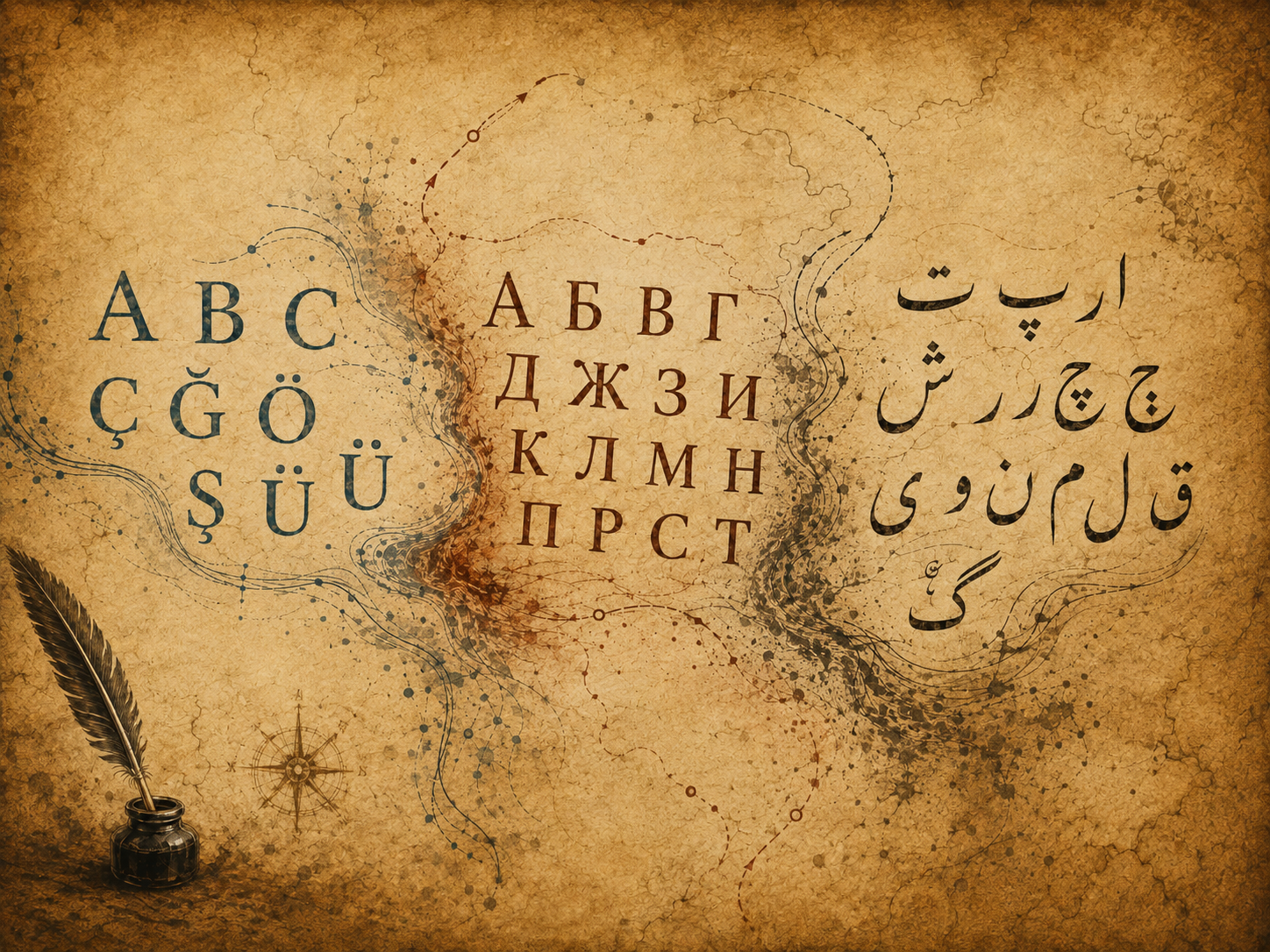
In November 2025, Turkish Minister of Education Yusuf Tekin made a declaration that passed largely unnoticed in Western strategic circles but sent a quiet tremor through the Persian-speaking world. Addressing the replacement of “Central Asia” (Orta Asya) with “Turkestan” (Türkistan) in Turkey’s national history curriculum, Tekin offered an explanation that was anything but pedagogical: the term “Central Asia,” he argued, had been deliberately introduced into academic literature to divide the Turkic world. The new curriculum,...
Read More...Diplomatic Blow in the Wrong Direction? Gideon Sa’ar’s Initiative for Israel to Recognize the Armenian Genocide
On Thursday, June 25, 2026, an unusual diplomatic development attracted the attention of both the Israeli public and international observers. On that day, Israeli Foreign Minister Gideon Sa'ar announced on his official X account that he intended to submit, at the next cabinet meeting, a draft resolution calling for Israel's official recognition of the genocide committed against the Armenian people by the Ottoman Empire during the final years of the First World War. Three days later,...
Read More...BESA Post-Soviet Conflicts Research Digest No. 33 (June 2026)
In June 2026, the BESA PSCRP authors have analyzed a wide range of regional issues, including the recent developments in Eastern Europe, South Caucasus, and Central Asia.
Read More...Ukraine In The Fifth Year Of The War: Social Challenges
Since March 2022 through November 2025, I visited Ukraine many times. Combined with maintaining constant contact with people living there and regularly following the Ukrainian media, this has enabled me to form my own understanding of a country that has, over the past several years, become Europe's true shield.
Read More...Monthly Monitoring of Analytical Publications on Post-Soviet Conflicts
Perhaps for the first time since our monitoring program began, we encountered a situation where two publications, both worthy of the quality of their research and scientific integrity, were not included in our review. This is because the authors chose the topic of these materials to add fuel to the fire of a specific conflict in the post-Soviet space.
Read More...Architects of Interdependence: Navigating the Convergence of Indo-Mediterranean and Trans-Caspian Corridors
The architecture of Eurasian connectivity is currently undergoing a fundamental transformation, driven by the systemic destabilization of traditional trade routes. As sanctions and geopolitical risks render the Northern and Southern corridors increasingly unreliable, the Middle Corridor is probably evolving from a supplementary diversification tool into an indispensable land artery linking the markets of the East and West. Furthermore, the potential integration of the Middle Corridor with the Indo-Israeli "Spice Route" creates a new "Eurasian arc...
Read More...Revisiting Abraham’s Iceberg: The Israeli-Azerbaijani Strategic Partnership and the Abraham Accords
The insights of this analysis allow a more detailed look at the Israeli-Azerbaijani strategic partnership. Drawing well-thought-out conclusions from this is even more essential for Israel, as many security-related issues depend heavily on the future trajectories of this important partnership. Following this, Azerbaijan’s value to the Jewish state will continue to remain crucial in the near future – even outside the Iranian issue and even if Baku remains outside the AAD.
Read More...When Pro-Palestinian Moral Advocacy and Russian MFA Rhetoric Start Speaking the Same Language
Russian official discourse has consistently promoted the claim that smaller states pursuing policies critical towards Russia, especially those aligned with NATO or the European Union, do not possess fully authentic sovereignty.
Read More...Regions: Post-Soviet Eastern Europe and Eurasia; Central Asia; South Caucasus; Middle East; Baltics;
Countries: Armenia; Azerbaijan; Belarus; Estonia; Georgia; Kazakhstan; Kyrgyzstan; Latvia; Lithuania; Moldova; Russia; Tajikistan; Turkmenistan; Ukraine; Uzbekistan; Iran; China; Israel; Turkey;
Topics: Post-Soviet Geopolitics; Global and regional powers; Inter-state conflicts; FSU states domestic political and social affairs;
Tolerated Memory, Withheld Recognition: Iran, the Armenian Genocide, and the Politics of Historical Asymmetry
Armenian memory is tolerated because suppressing it would alienate a...
Read MoreThe Jews of Ukraine Between Two Narratives
In late June, the most hotly debated issue concerning the...
Read MoreRenaming the Map: Turkey’s Cognitive War for Central Asia and Its Persian Dimension
In November 2025, Turkish Minister of Education Yusuf Tekin made...
Read MoreDiplomatic Blow in the Wrong Direction? Gideon Sa’ar’s Initiative for Israel to Recognize the Armenian Genocide
On Thursday, June 25, 2026, an unusual diplomatic development attracted...
Read MoreBESA Post-Soviet Conflicts Research Digest No. 33 (June 2026)
In June 2026, the BESA PSCRP authors have analyzed a...
Read MoreUkraine In The Fifth Year Of The War: Social Challenges
Since March 2022 through November 2025, I visited Ukraine many...
Read MoreMonthly Monitoring of Analytical Publications on Post-Soviet Conflicts
Perhaps for the first time since our monitoring program began,...
Read MoreArchitects of Interdependence: Navigating the Convergence of Indo-Mediterranean and Trans-Caspian Corridors
The architecture of Eurasian connectivity is currently undergoing a fundamental...
Read MoreRevisiting Abraham’s Iceberg: The Israeli-Azerbaijani Strategic Partnership and the Abraham Accords
The insights of this analysis allow a more detailed look...
Read MoreWhen Pro-Palestinian Moral Advocacy and Russian MFA Rhetoric Start Speaking the Same Language
Russian official discourse has consistently promoted the claim that smaller...
Read More


