Since the onset of the full-scale Russian-Ukrainian war in February 2022, Russian authorities and propagandists have been actively exploiting the great-power chauvinistic sentiments of ethnic Russians and Russified representatives of national minorities. “Russian national idea” has acquired an archaic appearance reminiscent of the doctrine of “official nationality”
PSCRP
The Russian-Ukrainian conflict has given Kazakhstan a new impetus in terms of diversification. Kazakhstan’s role as a key country in the Middle Corridor project is huge. The volume of freight traffic along this route doubled in 2022 and increased by another 65% in 2023 to 2.7 million tonnes of freight.
In March 2024, the PSCRP program of the BESA Center covered in its materials the regional developments in Central Asia and the South Caucasus, as well as particular problems related to Ukraine and Russia.
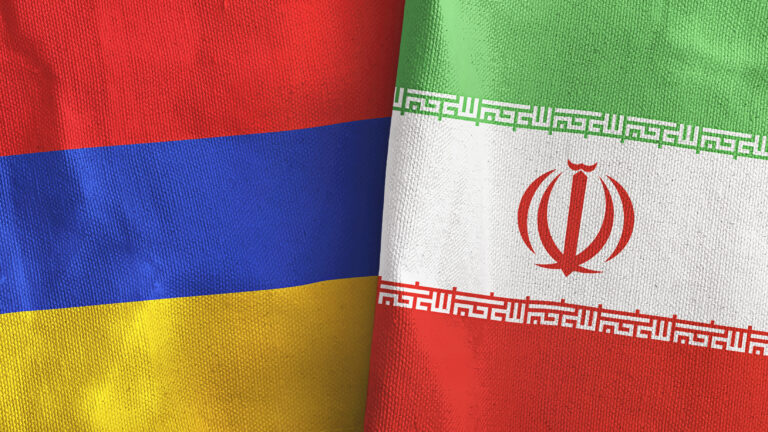
Iran would become Armenia’s new patron and it could eventually join the ranks of pro-Iranian proxies, with dire consequences for the country. In this scenario, Iran would also gain new arguments and resources in its interaction with Russia, Turkey and India, which it could exchange for something else. This could create new threats to Israel.
The hesitancy by the Biden administration to withhold advanced weaponry damaged the Ukrainian counteroffensive and may have led to Russia’s current upper hand in the conflict. As Russia has now adapted to the war, it will be much harder to change the momentum back.
All the countries of the South Caucasus are in anticipation, waiting for Russia’s withdrawal from the war with Ukraine. It is clear that it will emerge from this conflict weakened, but it is not known to what extent
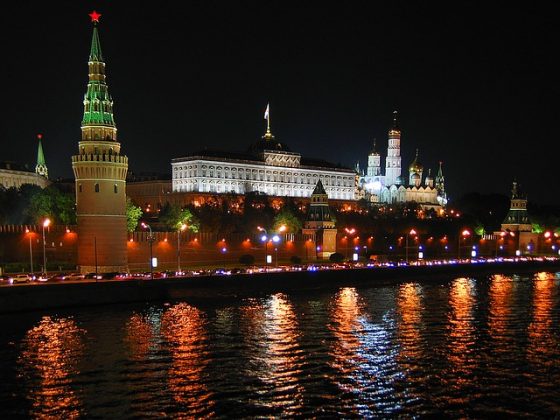
Terrorist act was most probably organized by ISIS-Khorasan. For Israel it is important that the Moscow synagogue was originally the primary target. Russian security services demonstrated very low effectiveness during the “Crocus city” events.
The revolutionary rhetoric and practices corresponding to the “second stage of the Islamic Revolution” proclaimed by IRI leaders two decades ago have in some cases proved unproductive in building Tehran’s bilateral relations with a number of Muslim states. This includes post-Soviet Central Asia.
Iran has been an active player in Central Asia for more than three decades, arguing for its special role in the development of the post-Soviet states of this sub-region — Kazakhstan, Kyrgyzstan, Tajikistan, Turkmenistan and Uzbekistan. For Iran, the existence of ties with Central Asian states is a continuation of centuries-old traditions of historical and cultural relations interrupted during the Soviet era.
The policies of Azerbaijan, Georgia and Armenia, as well as their foreign policy orientations, play a key role in shaping regional security and stability in the region. The problem is that the South Caucasus has never been a unified geopolitical space throughout its modern history.